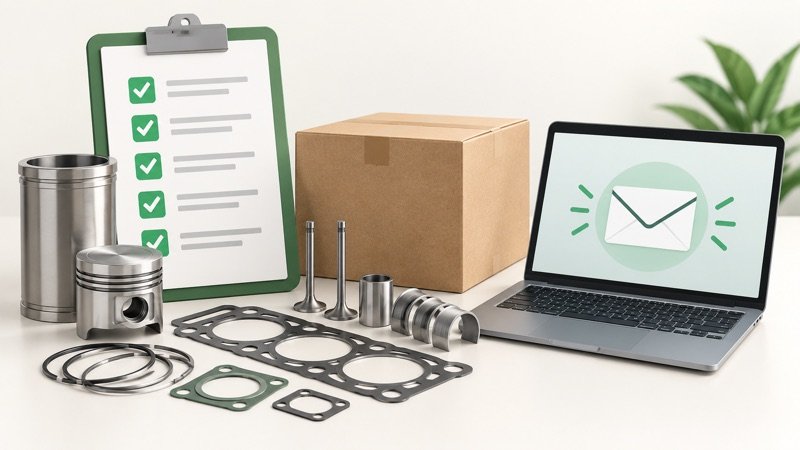
You ask for a complete Weichai overhaul kit and receive two very different quotations. One looks affordable. The other lists enough components to fill a workbench. Which offer covers your repair? Without a written contents list, you may discover the answer after freight arrives and the workshop is waiting. I prefer fewer surprises and fewer emergency enquiries. At Weichaistore, we separate the gasket package from the broader repair order, then define every included item before comparing the final purchase cost.
I treat a Weichai overhaul gasket kit as a gasket and sealing package whose actual contents need written confirmation. A complete overhaul parts order is the engine-specific list your workshop approves, potentially combining that package with separately specified mechanical components. I request engine identification, itemized references, quantities, required specifications and exclusions for both options. We compare the same repair scope, resolve missing information and approve the list before dispatch. Neither a kit name nor a photograph establishes a complete order.
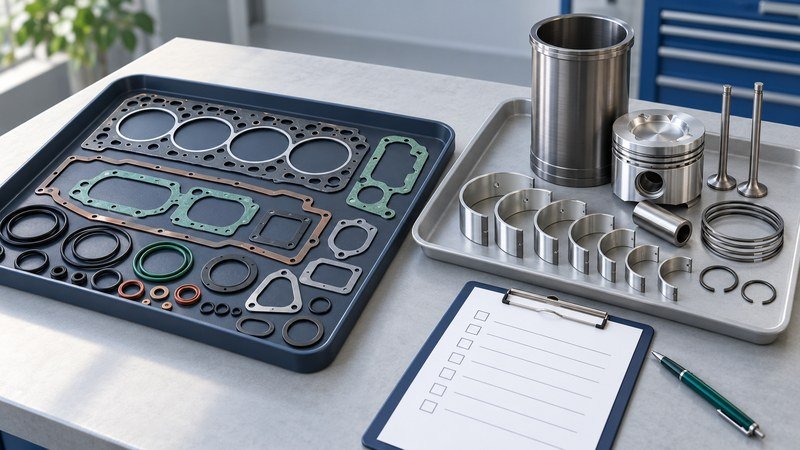
I will show how we turn these two purchasing descriptions into a clear scope, a useful comparison sheet and an overseas enquiry your supplier can answer without guessing the requirements.
Which Engine Details Should I Confirm Before Choosing the Scope?
I start with the full engine model, serial number and equipment application. Add a readable nameplate photograph and the workshop’s parts references where available. Keep different engine variants on separate enquiry lines. I use a family name to organize the request, then seek confirmation for the exact application. A shared name on two quotations is a starting point for checking, not my approval criterion.
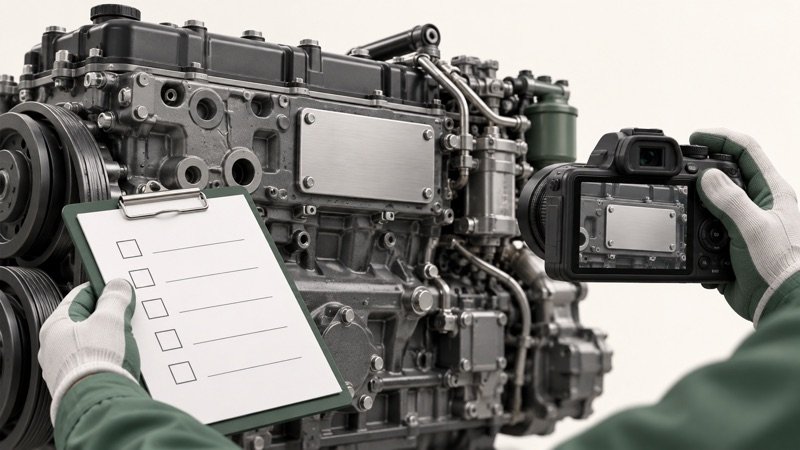
Our 612600900277 gasket-kit enquiry page illustrates why this matters. Use its reference to start an enquiry; confirm the actual application and offered contents before purchasing. I do not extend that number to every WD615 or WP10 engine. When a reference is unclear, we ask for engine details and supporting identification instead of letting a convenient catalogue label settle the question.
What Exactly Should My Gasket-Kit Contents List Show?
I request a component list with each gasket or seal identified, its quantity per kit and the number of kits offered. Ask explicitly about head gaskets, crankshaft seals, valve stem seals and O-rings when the workshop requires them. These are questions to resolve, not a promise that every package contains them. Mark each requirement as included, separately quoted, excluded or awaiting confirmation.
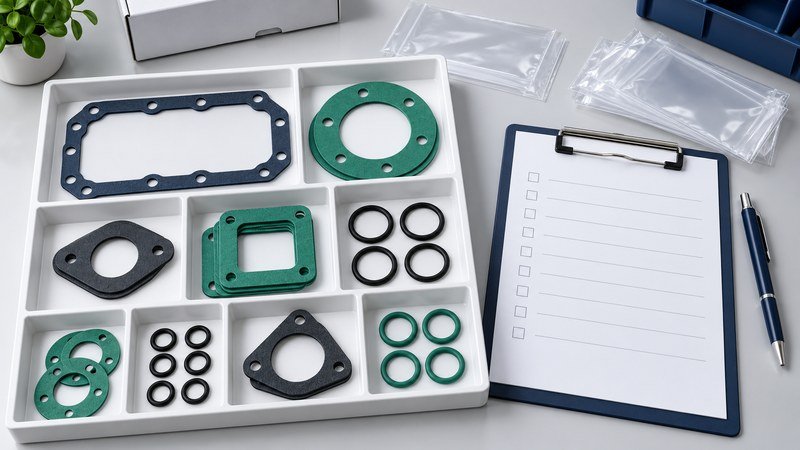
For an individual head-gasket enquiry, our 612600040355 cylinder head gasket page provides a separate purchasing route. Keep its reference and required specification distinct from the kit description. I also check whether a quantity means pieces, sets or engines serviced. The scope sheet below is our buying framework. It does not prescribe the contents of a manufacturer’s kit or a repair procedure.
| Purchase question | Gasket-package enquiry | Complete parts-order enquiry |
|---|---|---|
| What defines the scope? | Approved gasket and seal contents | Workshop-approved itemized repair list |
| Are head gaskets included? | Confirm references, specification and quantity | Include only as expressly itemized |
| Are mechanical parts included? | No assumption; ask for separate lines | Specify each required component individually |
| What does one set cover? | Confirm contents per kit and kits required | Confirm units and quantities per order line |
| What remains unresolved? | Record missing kit-content confirmation | Record pending inspection and unpriced requirements |
When Should I Request Additional Mechanical Overhaul Parts?
I request mechanical components when the responsible workshop identifies them in the approved repair scope. A gasket-package quotation does not answer whether your job also requires pistons, liners, rings, bearings or other components. Record confirmed requirements separately from items awaiting inspection. Buying a larger package is not a substitute for diagnosis. The engine cannot read the word ‘complete’ on a purchase order either.
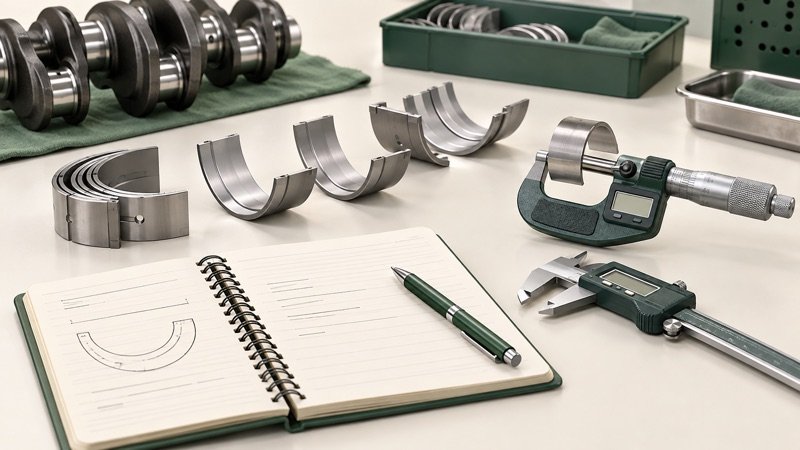
For a bearing enquiry, I ask the workshop to specify the reference, required size, position and quantity. Our 611600010020 main-bearing enquiry page is one reference-specific starting point, not a recommendation for every overhaul. I keep measurement records beside the requested specification. We do not choose a repair size from an online image or assume a photographed bearing set defines the offered package.
How Do I Check the Origin and Identity of Each Supply Line?
For an item ordered as genuine Weichai supply, I request traceable identification and follow Weichai’s official parts-verification guidance. It describes anti-counterfeit identification and an overseas dot-matrix photo-verification process. Retain the result against the relevant item. We keep origin verification separate from confirming application, condition and supplied quantity. A successful identity check is one record in the file; it does not answer every purchasing question.

I state the agreed supply category for each line rather than assuming the whole mixed order shares one description. Ask which manufacturer or brand supplies each item and what evidence accompanies it. Any proposed alternative needs written approval against the original requirement. Keep current product photographs with the offer, while using the itemized list to define quantities. A polished box should not do the paperwork’s job.
How Can I Compare Kit and Complete-Order Quotations Fairly?
I compare quotations against one approved scope revision, including unit definitions, quantities, exclusions and unresolved items. The International Trade Administration’s pro forma invoice guidance lists quoted items, unit prices, totals, payment terms, delivery point and estimated shipping date among useful fields. I request those details alongside packing and quotation validity. Separate confirmed prices from estimates, and identify which charges are included in each offer.
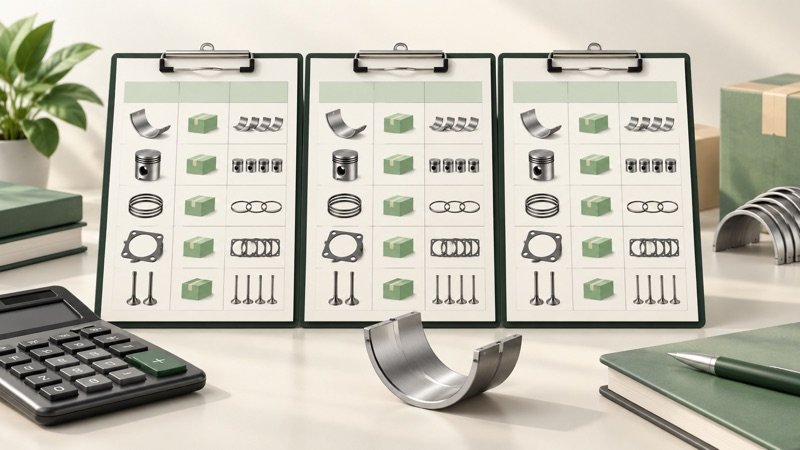
Imagine two offers: one includes only the approved gasket package, while the other also includes separately listed mechanical parts. I would not label the cheaper total a saving until both cover the same requirement. Add missing quoted items and delivery charges where applicable. Keep unpriced items visibly unresolved. If a supplier cannot confirm a required component, we have a scope question to answer before choosing the order.
What Should I Agree Before Packing and Overseas Dispatch?
Before dispatch, I match the accepted list to the packing plan and agreed destination. Request package labels that connect contents to order lines, with protection appropriate to the components supplied. The International Trade Administration describes a packing list as an itemized record of package contents, weights and dimensions. I use it for reconciliation, while keeping fitment confirmation in the engine-specific order record.
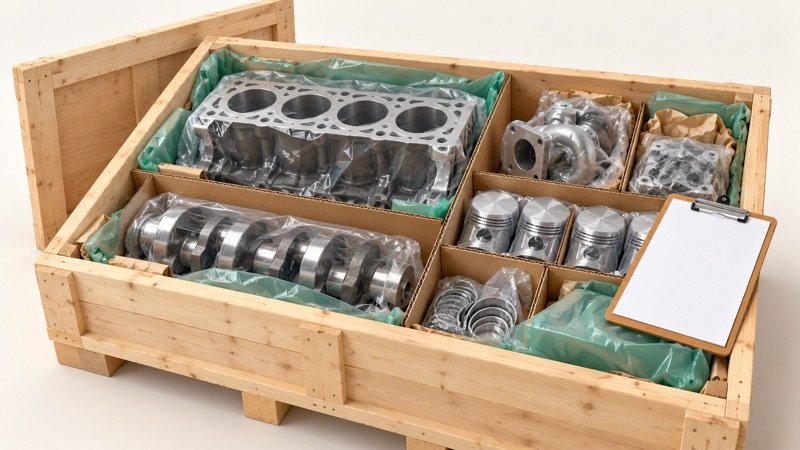
For an overseas quotation, send the details below and identify any workshop decisions still pending. If a partial shipment is proposed, ask which items will travel together and how the remaining lines will be recorded. For the wider planning process, see our engine overhaul parts-list guide. This comparison focuses on package boundaries; that guide helps organize the broader enquiry before we price it.
- Full engine model, serial number, application and nameplate photograph.
- Kit reference, requested contents and number of kits or engines.
- Additional component references, specifications, units and quantities.
- Workshop-approved requirements and decisions still awaiting inspection.
- Agreed supply category and evidence requested for each item.
- Destination, required schedule, packing requirements and quotation terms.
Conclusion
I choose the package after the repair scope is clear. Approve the contents, quantities, specifications and exclusions before comparing totals. Send us your engine details and itemized requirements so we can clarify the quotation. A precise list gives ‘complete’ a meaning both buyer and supplier can use.