A low turbocharger price can look excellent until the shipment arrives with a different connection, an unclear reference or missing accessories. Your workshop asks questions that the quotation never answered, and purchasing begins again. For an overseas buyer, that uncertainty belongs at the enquiry stage. I recommend identifying the installed assembly and defining the offered scope before comparing prices. At Weichaistore, we use a clear request to organize those questions and keep the approval decision attached to the order file.
Prepare your Weichai turbocharger RFQ with the complete engine identification, existing turbo reference, readable tag photographs and views of the assembly connections. State whether you need a complete assembly or a specified component, and ask the supplier to list included items. Confirm the offered manufacturer, exact reference, proposed alternatives, quantities, packing and timing in writing. We recommend comparing prices only after those descriptions agree. Keep technical approval with the responsible workshop and retain the approved specification beside the purchase order.
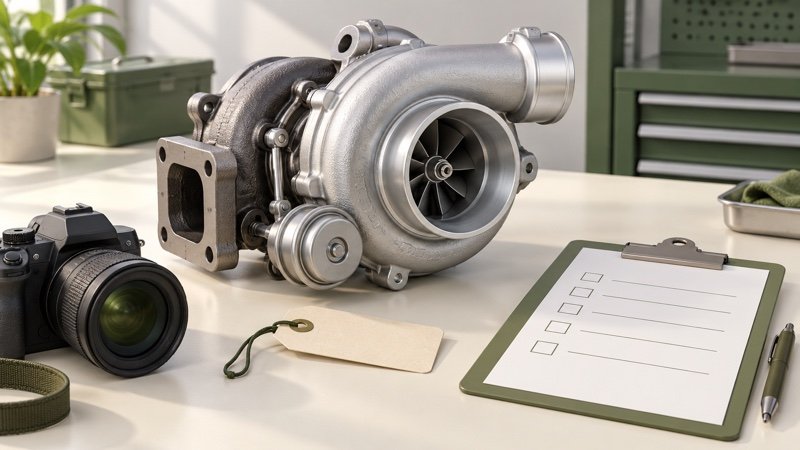
I would organize the enquiry around these six questions. They help your purchasing team compare the same requirement, while giving the supplier a clear record of details still needing confirmation.
Which identification details belong in my turbocharger enquiry?
Start with the complete engine designation and a clear photograph of its nameplate. Add the installed turbocharger identification, preserving every readable character. In its turbo identification guidance, Garrett describes nameplates carrying part, model and serial information. That explains why identification photographs matter. Garrett numbering examples apply to Garrett products; they do not establish a replacement cross-reference for a particular Weichai installation.
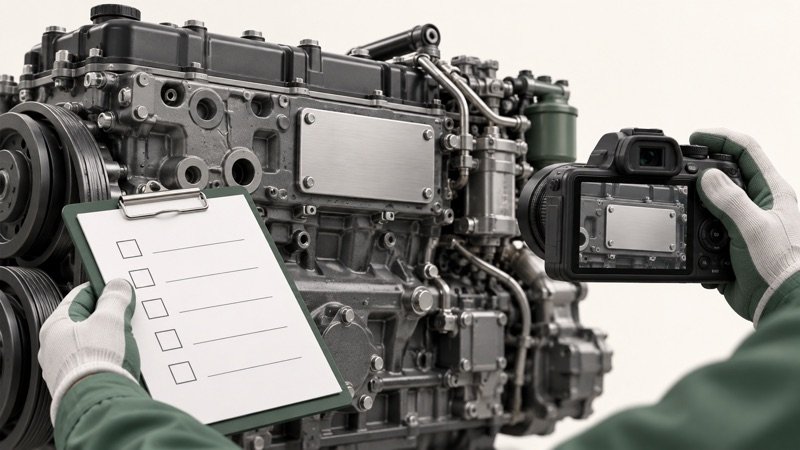
Keep the number you requested separate from the number a supplier proposes. Our turbocharger 612601110954 enquiry page and 612601111005 product page provide starting points for individual requests. A listing or a shared engine-family description does not approve substitution between them. I would copy the requested identity into the quotation comparison and leave any proposed replacement visibly awaiting confirmation by the responsible technical reviewer.
Which assembly features should my photographs show?
Photograph the complete assembly from several useful directions, then add close views of the mounting faces, inlet and outlet connections, oil connections and any actuator or connector present. Ask the workshop which additional views or measurements it needs to assess the proposed replacement. Our recommendation is to remove ambiguity from the discussion. A photograph provides context; the approving technician still needs the correct identification and specifications.
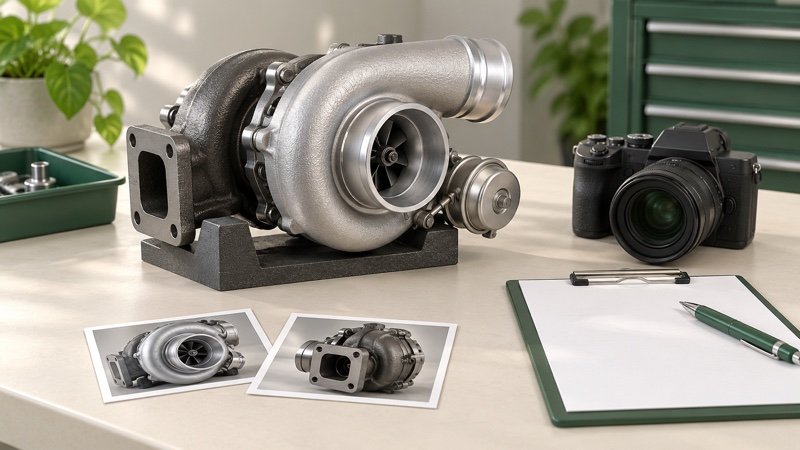
Use the same viewpoints when requesting photographs of the offered unit. Put the existing and proposed references beside those images in your enquiry record. For a request involving turbocharger reference 612601111056, the photograph set should relate to that exact offer. Do not let an attractive catalogue image quietly become evidence for a different assembly. Ask the supplier to identify any illustration that is only representative.
How do I define the quoted supply scope?
Define exactly what the price covers. If you require a complete turbocharger assembly, ask the supplier to identify the housings and any actuator, brackets, fittings or gaskets included in that offer. If you need only a component, describe it explicitly and ask the workshop to approve that scope. I would avoid an order line that says only turbo kit. It leaves too much room for interpretation.
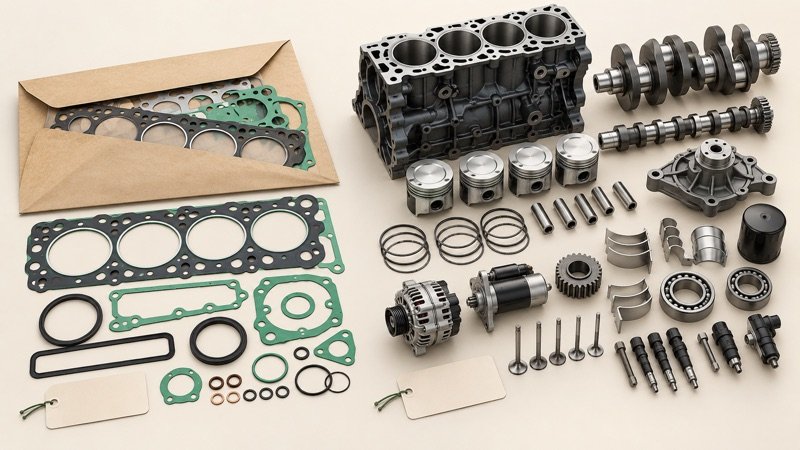
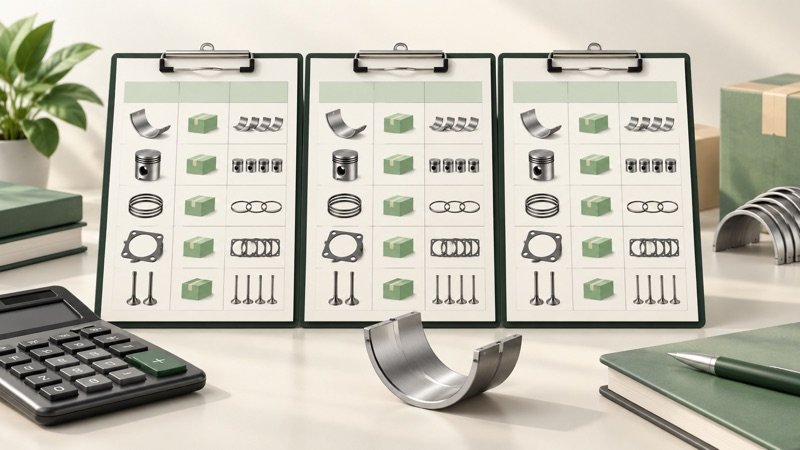
The table below is our suggested quotation record, not a universal manufacturer packing list. Use it to capture the offered scope and mark exclusions. A blank field should mean awaiting confirmation, rather than silently included. Ask for written clarification before comparing totals. Two suppliers can use the same short product description while quoting different contents. A cheaper box is less exciting when half your shopping list remains outside it.
| Quotation field | What I would ask the supplier to state |
|---|---|
| Identity | Requested reference and exact offered reference, with any difference highlighted |
| Supply scope | Complete assembly or specified component, with included items and exclusions |
| Offered goods | Manufacturer or brand, condition and supporting identification |
| Approval | Proposed alternative and the responsible technical reviewer |
| Shipment | Quantity unit, package identification, proposed timing and shipping scope |
What should I check before accepting an alternative?
An alternative needs an explicit technical decision. Ask the supplier to state the offered reference and the basis for its proposed application, then submit that information to the responsible workshop. Garrett’s installation guidance emphasizes checking the correct part number and investigating underlying causes before replacement. We use that as general context, not a Weichai-specific interchangeability approval or a diagnosis of your engine.

I would also ask who will confirm any actuator setup or calibration requirement for the proposed unit. Keep installation specifications with the applicable manufacturer instructions and qualified technician. Our purchasing file should record what was approved and by whom. It should not become an improvised adjustment manual. If the workshop has not resolved the engine fault or replacement identity, record that question before turning an enquiry into a purchase.
How can I compare prices and overseas packing fairly?
Compare the same approved identity, brand, condition, quantity unit and included items. Record each supplier’s proposed timing, quotation validity and shipping scope separately. Ask whether an offer is for new or remanufactured goods, and request the documents relevant to that offer. I would use a written clarification line for every difference. This is more useful than awarding the order to the smallest number in an email.
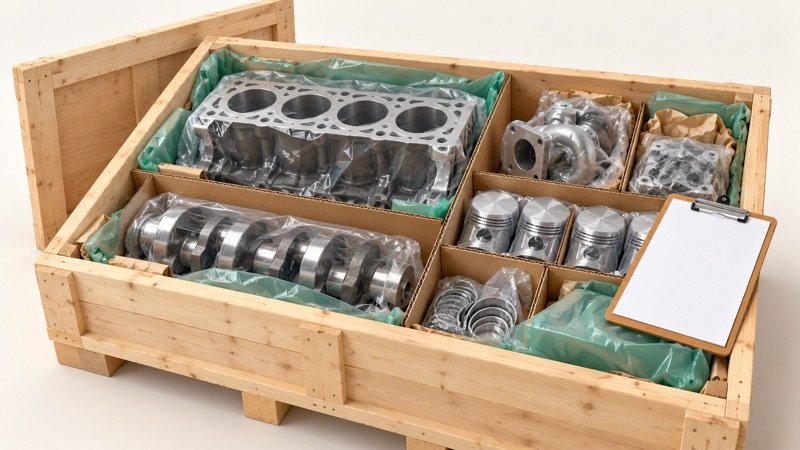
Agree how the assembly will be supported and protected in transit, including vulnerable connections and any actuator. Ask for package identification tied to the approved order line. The International Trade Administration’s packing-list guidance describes package contents, weights and measurements. We would use those details for receiving and shipment planning. Confirm the proposed arrangement with the supplier before dispatch, including how separate accessories will be identified.
What should I send Weichaistore for a usable quotation?
Send us the engine identification, existing turbo reference, relevant photographs, required scope and quantities. Include the destination and requested timing for review. If your workshop has approved a particular replacement, attach that record. If an important detail remains unknown, mark it openly. This gives us a useful starting point for an itemized enquiry, without treating the engine-family name alone as a complete specification.
For repeat orders, retain the approved reference, scope and supplier description from the previous transaction, then confirm that the new requirement is the same. A different vehicle or engine configuration deserves its own review. Ask for an updated offer rather than assuming an old quotation still applies. I would keep approvals and later changes together so the receiving team can compare the delivered goods with the actual purchasing decision.
- Complete engine designation and nameplate photograph
- Existing turbo reference and readable identification photographs
- Assembly views and workshop-approved specification where available
- Complete assembly or itemized component scope and quantities
- Proposed replacement approval or clearly marked open questions
- Destination, packing needs and requested timing
Conclusion
A useful Weichai turbocharger RFQ identifies the assembly, defines the contents and records technical approval before price comparison. Send Weichaistore your turbo reference and enquiry details, with photographs, quantities and destination. We can organize the supplier questions around that documented requirement.