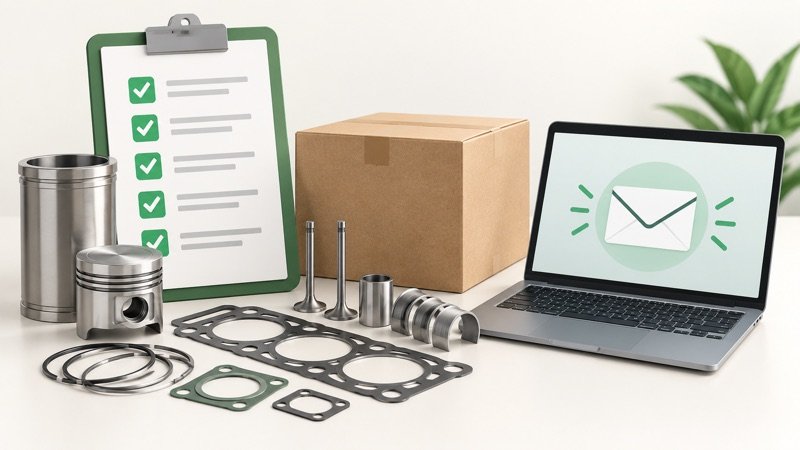
A cylinder head quotation can look wonderfully simple until two suppliers use the same description for different packages. One price includes fitted valves; another leaves assembly work to your workshop. Compare those totals without checking contents, and the apparent bargain becomes an unfinished repair plan. Overseas buyers then face extra questions about missing items, technical responsibility and packing. At Weichaistore, we start with a written supply scope. It gives every quotation the same job to answer before money changes hands.
I choose a bare or assembled cylinder head by matching the engine, defining every included component and confirming the workshop work still required. We ask for the complete head reference, engine identification, current photographs, condition and an itemized inclusion list. Then we compare offers using the same quantities, evidence, packing and commercial terms. A supplier’s assembly label helps organize the enquiry, but the approved contents determine the purchase. Keep gasket and hardware requirements visible as separate, clearly agreed order lines.
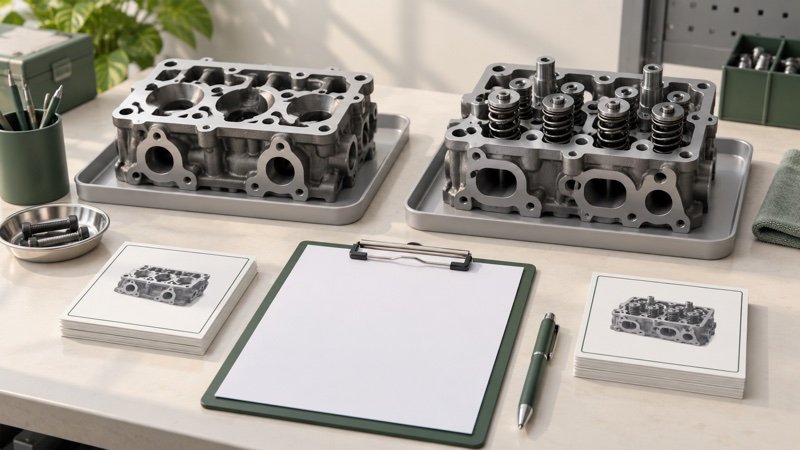
Here is how I turn that broad choice into a practical purchasing record, so your workshop, supplier and procurement team can discuss the same head and the same remaining work.
Which engine details should I confirm before requesting a head?
Begin with the installed engine and the required replacement reference. We request the complete model, serial number, application and readable nameplate photographs. Add the old head’s markings and the number of heads being serviced. Our Weichai cylinder head enquiry page provides a starting point for a discussion; the selected reference and configuration still need confirmation for your engine.
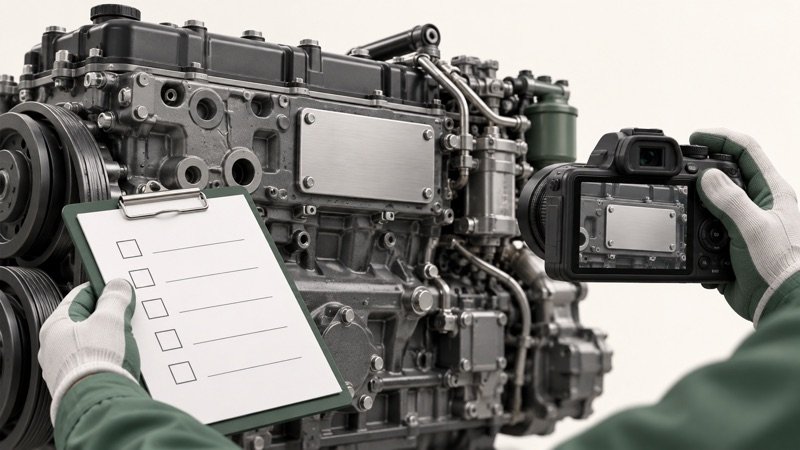
Keep each engine variant and head reference on its own order line. Retain every suffix when copying a number. If a marking is unreadable, say so and provide photographs instead of completing the number from memory. We also ask whether the request concerns one repair or distributor stock. That distinction helps define the quantity and the identification record needed for subsequent orders.
What does the supplier include in a bare or assembled head?
Treat those words as headings for an inclusion list. Motorservice’s cylinder head overview describes different equipment levels, including heads supplied with valves and springs. AMC’s catalogue also distinguishes bare, mounted and camshaft head offerings. These examples concern those manufacturers’ portfolios. They explain why we request exact contents; they do not establish the contents or fitment of a Weichai quotation.
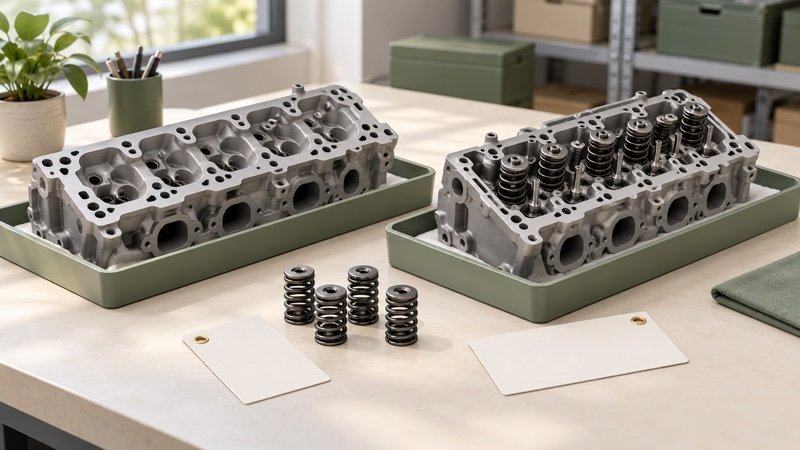
Ask the supplier to identify guides, seats, valves, springs, retainers, seals and any applicable rocker or camshaft components individually. Mark each as included, excluded or awaiting confirmation. Record whether included items arrive fitted or separately packed. A photograph can clarify the proposed package, but the written list should say which photographed items are actually offered. “Complete” deserves a contents page, however confident its punctuation looks.
How do I confirm interfaces and workshop responsibilities?
Have the supplier review clear views of the original head’s top, underside, ports, mounting areas and identification marks. Ask the qualified workshop which configuration and technical documents apply. We use photographs to support that review, alongside the complete reference and engine identity. Shared family names or similar castings alone leave important questions unanswered. Record the proposed replacement and every difference requiring technical approval.
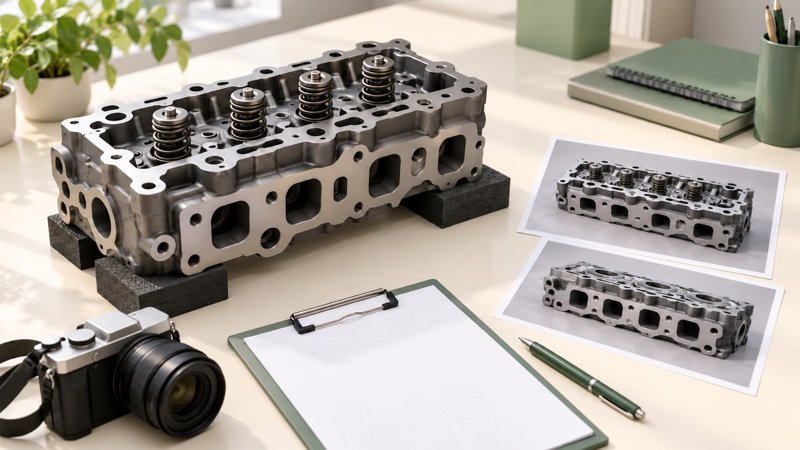
Agree who confirms the remaining preparation, assembly and inspection work. Ask the workshop to identify applicable procedures and acceptance requirements before selecting a package. We would request clarification of any machining, component transfer or adjustment still needed. Those decisions require the correct service information and competent technical review. Keep the supplier’s delivered scope and the workshop’s remaining scope next to each other in the purchasing record.
What evidence makes two head quotations comparable?
Request the offered manufacturer, supply condition and traceability information. Ask explicitly whether the item is new, remanufactured or otherwise described, and keep that description in the quotation. For claimed inspection or testing, request the available record and how it relates to the offered head. We prefer a specific explanation of checks performed over a general quality slogan. A document should answer a purchasing question.

Use the same comparison sheet for every offer. Include any separate parts and workshop work when reviewing the overall purchase scope. Ask suppliers to resolve blank cells before approval. The table below is our suggested record, rather than a universal definition of either package. Fill it with the actual offer details and keep the accepted version with the order.
| Comparison item | What we ask the supplier or workshop to confirm |
|---|---|
| Head identity | Complete reference, engine configuration, manufacturer and condition |
| Included components | Each item, quantity and whether fitted or separately packed |
| Associated parts | Required gasket, seals, hardware and explicitly excluded items |
| Remaining work | Responsible workshop, applicable documents and outstanding approvals |
| Delivered offer | Packing, destination, commercial terms and quotation validity |
What else should I agree before overseas dispatch?
Confirm the associated gasket and fastener requirements with the workshop. Elring’s cylinder head gasket guidance describes gaskets matched to particular engine requirements and discusses manufacturer-dependent head-bolt reuse. Our purchasing action is to obtain the applicable requirement and itemize the requested parts. We do not turn that general guidance into a universal Weichai gasket specification or bolt-reuse decision. The selected engine’s technical information governs that review.
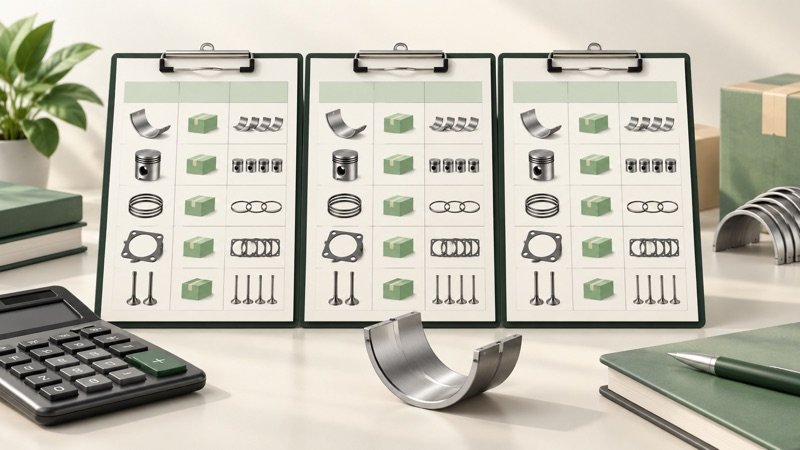
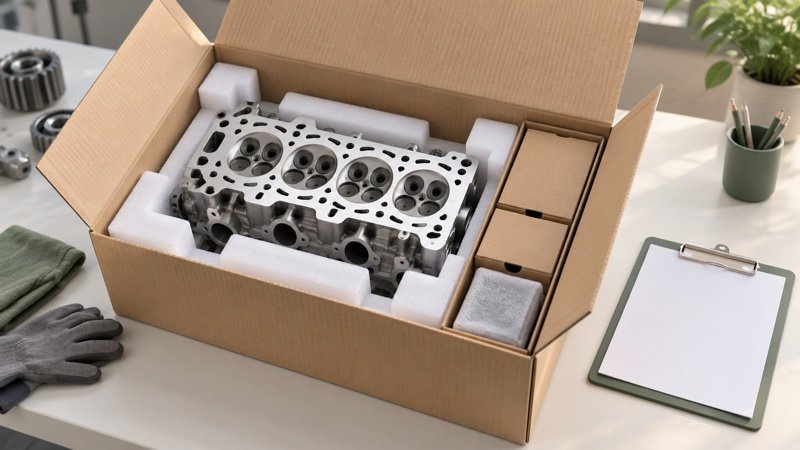
Our cylinder head gasket enquiry page can help organize a separate sealing-component request. Match its reference to the confirmed repair requirement. For shipping, ask how machined faces and openings will be protected, how the head will be supported and where separately supplied items will be listed. Record packing details, shipment terms and requested timing in the offer, with any unresolved point clearly identified.
What should my cylinder head RFQ contain?
Send one organized enquiry with a clear preferred supply scope. If you want both bare and assembled options, request two separately itemized alternatives against the same engine record. We would ask the workshop to identify the work remaining under each option. That makes the comparison useful for the repair decision, rather than merely producing two prices with similar titles. Include these six items:
- Engine model, serial number, application and nameplate photographs.
- Complete head reference, suffixes and original component photographs.
- Required pieces, repair scope and any alternative package request.
- Included components, supply condition and fitted or loose status.
- Requested evidence, workshop responsibilities and outstanding technical questions.
- Destination, packing requirements, requested timing and commercial questions.
Before approving, I check that the quotation version, component list and technical clarifications agree. Ask the supplier to record any substitution for review before shipment. Keep approved photographs and identification details with the purchase record. For repeat orders, check that the next request concerns the same confirmed configuration. A useful order file should make that check straightforward for the next person handling the enquiry.
Conclusion
Choose the head against a confirmed engine record and an agreed inclusion list. Compare the remaining workshop work as carefully as the quoted price. Contact Weichaistore with your references, photographs and required scope to begin a clear enquiry.