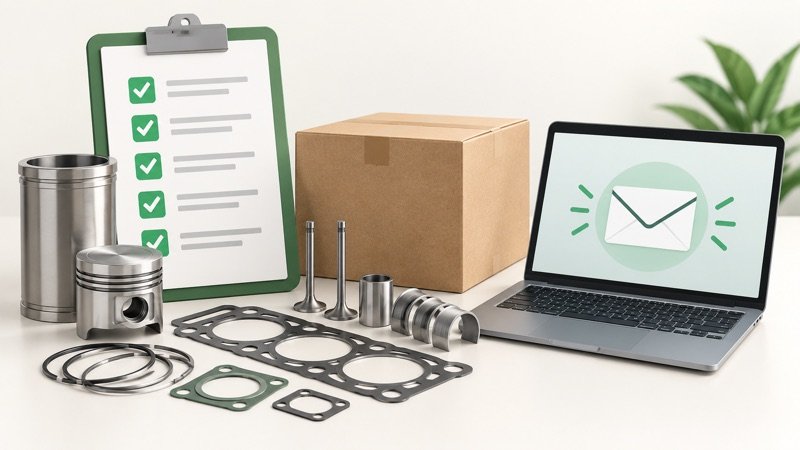
A piston, liner and ring quotation can look complete until the shipment arrives with a different idea of what a set includes. A ring pack may be quoted per cylinder while a piston price excludes the pin. The resulting gaps can delay an overhaul and leave a buyer comparing prices that cover different work. At Weichaistore, we begin with an identified engine and an itemized supply scope. That gives suppliers, purchasing teams and workshops a record to confirm before ordering.
I specify a piston, liner and ring order by recording the engine identification, each part reference, the workshop’s configuration and the service quantity. We request separate quantities for pistons, liners, ring packs, pins and any retainers or seals. Then we ask each supplier to state the manufacturer, condition, packing unit and included components. The workshop must confirm measurements and fitment using service information before approval. A named kit is a starting point, not a substitute for an agreed contents list.
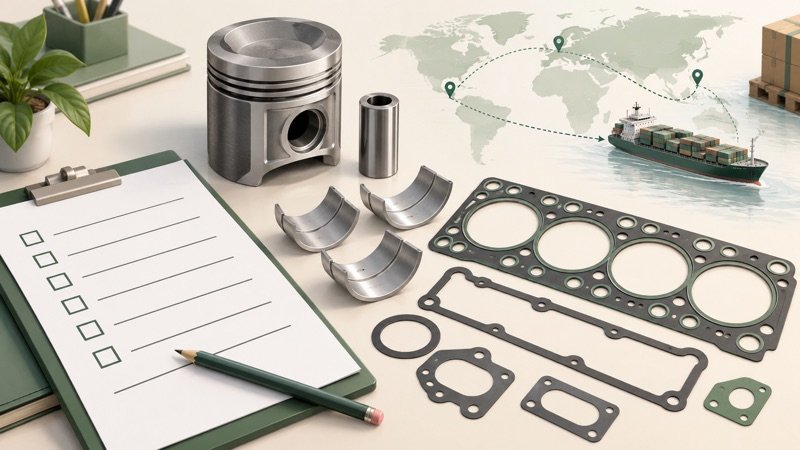
Here is how we turn that information into a practical overseas enquiry, compare offers on the same basis and keep each approved component connected to its intended engine and cylinder.
Which engine details belong in the enquiry?
Start with the complete engine model, serial number, application and readable identification plate photographs. We also request the references on the existing components where they are legible. Keep suffixes and punctuation when copying a number; a shortened reference can leave the supplier with a different question. Our piston enquiry page and liner enquiry page are places to start a discussion, not evidence that a particular item fits your engine.
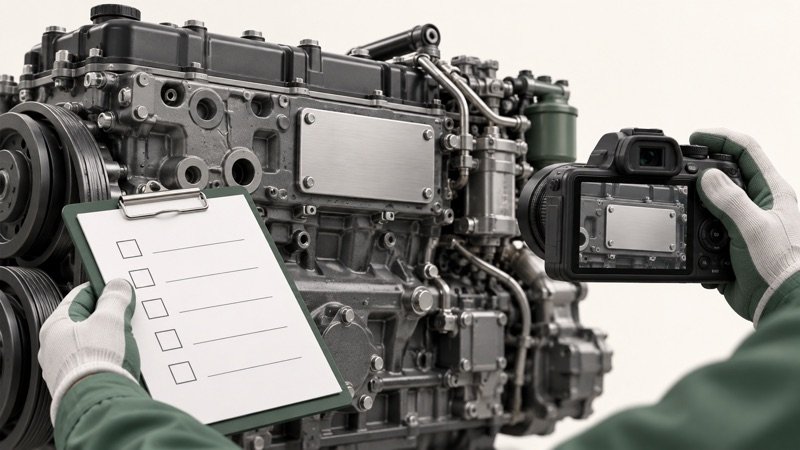
Record how many engines and cylinders are involved, then identify any differences between engines. A mixed fleet deserves separate lines rather than one optimistic description. If a marking is missing, tell us what is missing and attach clear views of the old component and its packaging. Photographs help the discussion, but they do not replace an approved part reference or the workshop’s fitment decision.
How should the workshop confirm the required configuration?
Ask the workshop to confirm the configuration and required dimensions using the service information applicable to the actual engine. We would request its written findings and any relevant repair decisions before asking suppliers to quote. Do not turn a family name, picture or catalogue search result into an automatic interchangeability claim. If a size, component version or machining decision remains unresolved, mark that field as pending and ask the qualified workshop to resolve it before purchase approval.
Motorservice’s general cylinder liner guidance says liner protrusion values depend on the manufacturer. The supplier can quote the requested reference and identify any proposed alternative. We ask for the manufacturer’s designation, condition, current photographs and the basis for the proposed substitution. The workshop should review any change against the engine record and applicable technical information. A neatly printed offer does not establish fitment.
What does each piston, liner and ring set include?
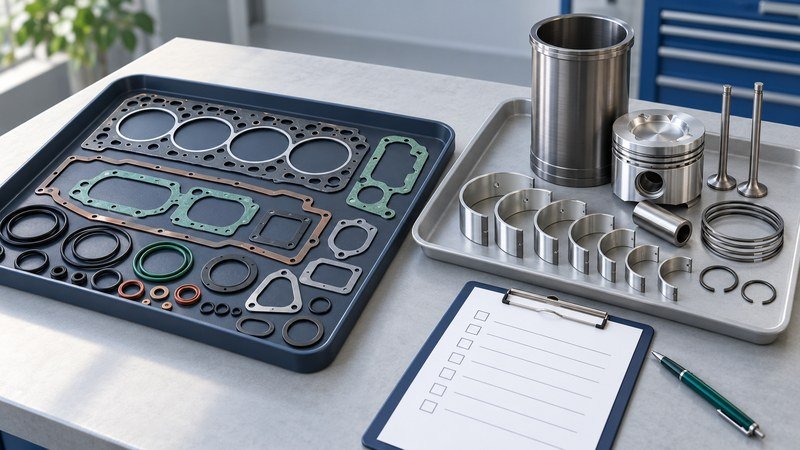
Define every component separately, even when the offer uses the word kit. We ask whether the price covers a piston, liner, ring pack, piston pin, retainers and any separately requested seals. Record whether each item is included, excluded or awaiting confirmation. The ring set enquiry page starts a request; agree contents and suitability for the selected engine.
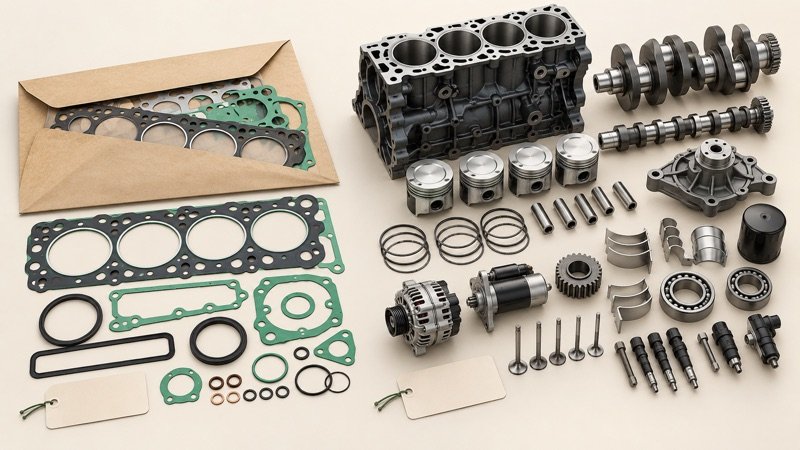
Motorservice’s general piston ring guidance discusses ring and groove checks and complete ring sets. It does not establish Weichai fitment. A quotation should state the number of pieces in each unit. One ring pack, one piston assembly and one engine order are different purchasing units. We ask the supplier to spell out which pieces are packed together and which arrive separately. If the buyer needs spares beyond the immediate repair, those quantities get their own lines. That avoids asking a warehouse team to decode the word set after the boxes reach the destination.
What evidence should we request from a supplier?
We request a clear statement of the offered manufacturer, supply condition and traceability evidence. Ask for photographs of the proposed product and packaging, and ask what inspection documentation is actually available for that offer. A photograph is not a test report or proof of origin. Ask how any record relates to the offered goods.

Give every supplier the same enquiry record before comparing prices. Our comparison includes part reference, approved configuration, manufacturer, condition, units, quantities and included accessories. Separate the cost of items that one supplier includes and another excludes. Note packing, destination, terms and validity. A price without a unit can answer the wrong question entirely.
| Comparison field | What we ask each supplier to confirm |
|---|---|
| Identity | Complete references and approved engine record |
| Scope | Pistons, liners, ring packs and separately supplied accessories |
| Quantity | Pieces per unit, number of units and cylinder coverage |
| Evidence | Manufacturer, condition, photographs and available records |
| Commercial | Packing, destination, validity and proposed terms |
How can we compare quotations on equal terms?
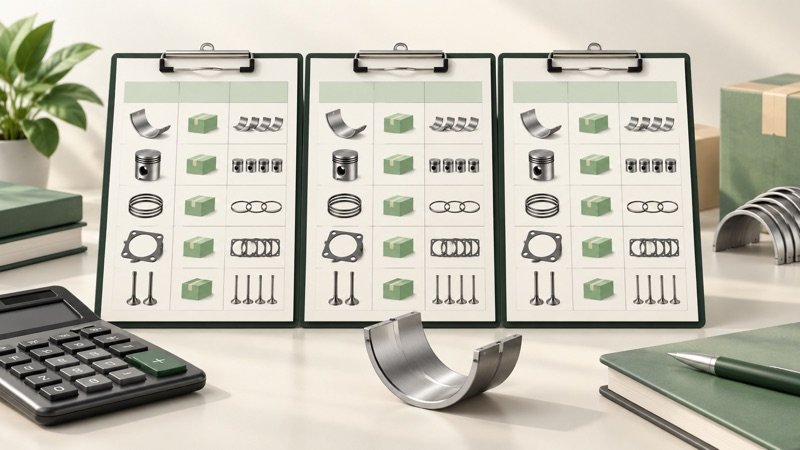
MAHLE’s engine parts catalogue lists pistons, rings, liners and kits. The table above is a purchasing worksheet, not a promise of kit contents. Each supplier should fill the cells for the actual offer. Mark unresolved information visibly and ask for a revised quotation when details change. Keep the workshop’s configuration approval beside the comparison. Where separate piston, liner or ring lines are needed, identify them individually instead of compressing everything into a single ambiguous engine set.
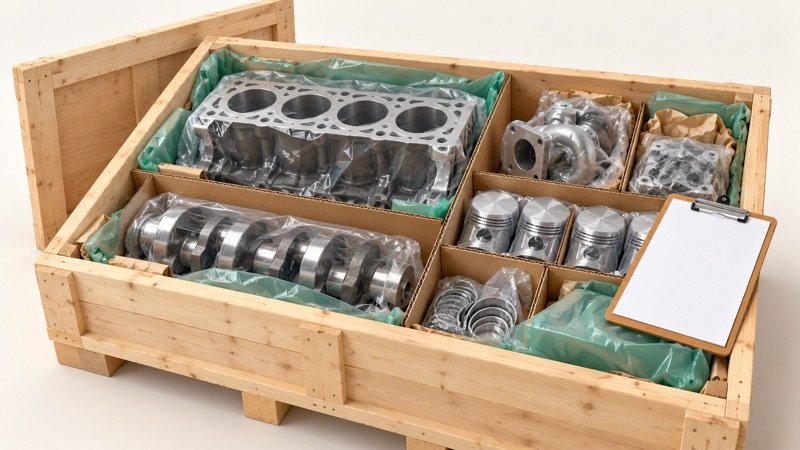
Before dispatch, ask how individual components will be identified, protected and listed on the packing record. We request an itemized package list that associates each line with its approved reference and quantity. Ask how mixed engine variants will be separated and how separately packed accessories will be accounted for. The supplier’s proposed protection should be agreed for the actual items and route. Do not assume that a photograph of a package establishes its contents.
What should we agree before overseas dispatch?
For an overseas order, record the destination, requested timing and commercial terms in the accepted offer. Identify who handles transport arrangements and which shipment documents are expected. Ask the supplier to flag an intended substitution before shipment so it can be reviewed, rather than discovering the change during receiving. Timing is an agreed commercial detail, not a guarantee inferred from an online listing. Keep the accepted quotation and packing instructions together. Our complete enquiry includes the six items shown next.
- Engine model, serial number, application and identification photographs.
- Complete component references, including suffixes where present.
- Workshop-approved configuration and any outstanding technical decisions.
- Quantities and requested supply scope for each component.
- Manufacturer, condition, photographs and available evidence.
- Destination, packing instructions, timing and commercial questions.
To request a usable quotation, send one organized file with the engine record, approved component requirements and required quantities. If a workshop is still measuring or reviewing an alternative, label that point as open. We can then discuss what is known without presenting an unresolved choice as an approved order. The six items above give our suppliers and purchasing team a shared starting point, while keeping each engine and component line traceable.
Conclusion
Choose the components against the confirmed engine record, approved workshop requirements and an itemized quotation. Contact Weichaistore with your references, photographs and quantities to begin a clear piston, liner and ring enquiry.