Choosing a Weichai marine engine by price and advertised horsepower can turn a simple enquiry into a complicated installation. Similar family names hide different model suffixes, speeds and equipment scopes. If our purchasing team approves an incomplete quotation, the unresolved details travel with the engine. I start with the vessel’s operating requirements, then compare documented marine variants and installation responsibilities. That gives us a practical buying process before an attractive price persuades anyone to skip the important technical questions entirely.
I choose a Weichai marine engine by matching its exact model, mechanical power, rated speed and confirmed duty to the vessel’s requirements. I then check gearbox interfaces, cooling, mounting, controls and applicable documentation with the responsible technical reviewer. Our quotations must define included equipment, inspection, delivery and local service responsibilities. The five examples below provide documented comparison points, not universal recommendations. Send us your engine identification or vessel brief so an enquiry begins with the information needed for technical confirmation.
Our buying checklist connects five official catalogue examples to the decisions that matter onboard. A bigger power number can impress a spreadsheet; it cannot approve a propeller or resolve mounting.
What vessel requirements should I define first?
I establish the vessel’s intended operation before shortlisting an engine. Describe the vessel type, normal loading, operating hours, cruising requirements and expected conditions. For a replacement, provide the existing nameplate, gearbox identification and installation drawings. Ask the engine manufacturer and responsible marine engineer to confirm the required power, speed and operating duty. These are our procurement questions, not a substitute for vessel engineering. Purchasing needs the resulting written specification.
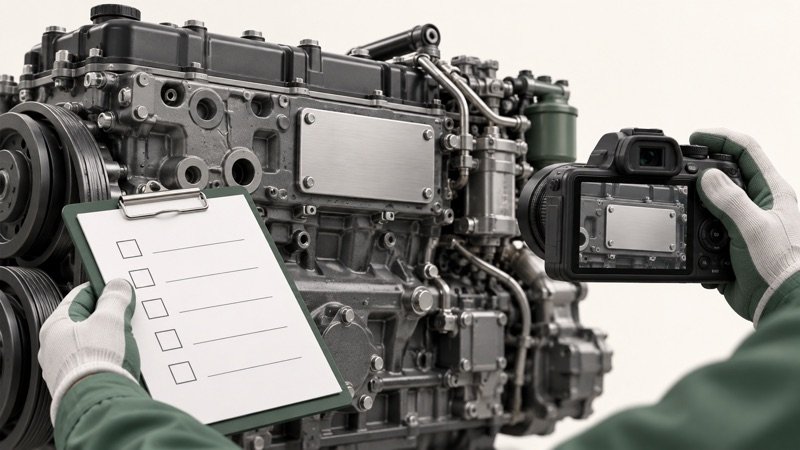
I also define the supply boundary. An engine quotation may cover a basic assembly, specified accessories or a wider propulsion package. List the gearbox, cooling equipment, control panel, mounts and commissioning services individually. Record new, used or remanufactured condition. Clarify who supplies each item and who checks the assembled installation. A photograph can show an engine beautifully. It rarely explains which equipment the invoice includes.
Which five documented Weichai marine variants can I compare?
I compare five named variants from Weichai’s current marine main propulsion catalogue. Each model in the table links to its official family page. I preserve the published power, speed and fuel system rather than merging several variants into one family-wide claim. WP4, WP6, WP7, WD10 and WP12 provide useful comparison examples. They are not a ranking, interchangeable replacements or confirmation that we stock the quoted unit.
| Marine variant | Listed engine power | Rated speed | Fuel system |
|---|---|---|---|
| WP4C120-18 | 88 kW | 1800 rpm | Mechanical |
| WP6C185-21 | 136 kW | 2100 rpm | Mechanical |
| WP7C240-18E220 | 176 kW | 1800 rpm | Common rail |
| WD10C278-18 | 205 kW | 1800 rpm | Mechanical |
| WP12C450-21 | 330 kW | 2100 rpm | Mechanical |
I read these figures as engine mechanical power. They do not describe the electrical output of a marine generator set. The official pages mark product parameters as reference information subject to change. Request a current model-specific datasheet and written duty confirmation for the offered configuration. Ask the supplier to explain its rating designation and permitted operating profile. Equal kilowatts do not make different rated speeds disappear.
Which installation interfaces and approvals need confirmation?
I ask the technical reviewer to check the complete propulsion interfaces. Request the proposed engine and gearbox drawings, connection details, mounting positions and required rotation reference. Have the responsible integrator review cooling arrangements, intake, exhaust, controls and service access. Confirm which equipment arrives assembled and which work occurs at the yard. These installation checks belong in the approval process; dimensions copied from another family variant should not close it.
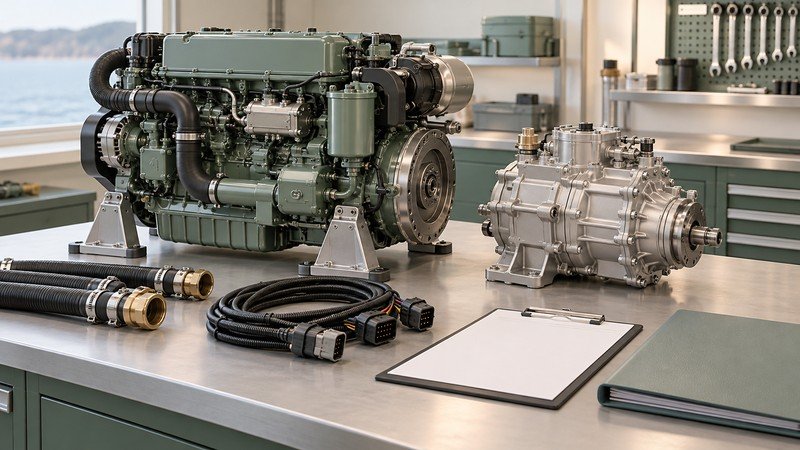
I request documents for the exact proposed model and configuration. Ask the responsible manufacturer and vessel adviser to identify any emissions, flag, class or project approvals that apply. Check document identity, issuing body, scope and validity through the appropriate official channel. A catalogue emissions label alone does not establish vessel acceptance. Put the document list and its reviewer in the contract so the shipment does not arrive with unanswered paperwork questions.
How do I verify the engine and replacement parts?
I verify the seller and supplied item separately. Request the seller’s legal identity, actual engine nameplate photographs, condition description and documents tied to the offered unit. For parts described as genuine, Weichai’s official verification guidance explains anti-counterfeit marks and an overseas dot-matrix photo-verification process. Ask which route applies to the supplied parts. Origin checking, compatibility confirmation and dimensional inspection address different questions. Evidence for one should not silently answer all three.

I plan spare parts from full engine identification, including the suffix and serial number. Add component references, quantities and clear photographs of existing markings. Our Weichai parts buying checklist helps organize this request. It cannot establish marine-engine fitment by itself. Ask for written reference confirmation before approving substitutions. Keeping a sensible maintenance list is more useful than ordering a mysterious carton labelled ‘suitable spares’.
How should I compare price, operating costs and support?
I compare quotations on the same supply and delivery basis. Separate the engine price from accessories, testing, packing, transport and commissioning. ITA’s pro forma invoice guidance identifies useful fields including prices, weights, dimensions, payment terms, delivery point, estimated shipping date and validity. Specify the agreed trade rule, named place and version. ICC’s Incoterms 2020 guidance explains how the rules allocate costs, risks and obligations between buyer and seller.
I assess value using documented assumptions. Request model-specific fuel information and the operating conditions behind it. Build our estimate from expected duty, fuel prices, installation work, maintenance and parts provision. A minimum consumption figure from a catalogue is not a promised annual fuel bill. Confirm local service contacts, commissioning responsibilities, warranty terms and the claims process in writing. I would rather compare complete costs than celebrate a cheap engine with expensive unanswered questions.
What should I include in our RFQ and acceptance plan?
I send one RFQ with enough information for a meaningful response. Use the checklist below to identify the application, proposed model, scope and approval responsibilities. Include the destination and requested schedule. For replacement work, attach existing identification and drawings. Ask the supplier to list deviations from our brief explicitly. An alternative can be considered, but it should arrive with an explanation rather than a disappearing suffix.
- Vessel type, operating profile and required power and speed
- Full engine model, serial number and existing nameplate photographs
- Gearbox identification, interfaces and relevant installation drawings
- Included equipment, condition and requested parts references
- Required documentation, technical reviewer and acceptance process
- Destination, packing, delivery basis and requested schedule
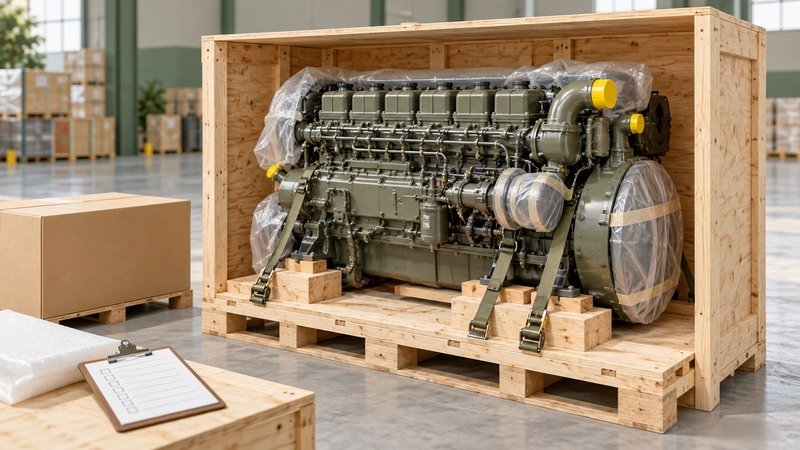
I agree acceptance before approving payment and dispatch. Match the offered engine identification, included equipment and documents against the approved quotation. Define any test, its conditions, acceptance criteria and reviewer beforehand. Confirm protected packing, lifting arrangements and shipment records. Use our contact page for an engine or parts inquiry. Keep vessel integration and commissioning approval with the named manufacturer or responsible marine integrator, so each important decision has an owner.
Conclusion
I choose marine engines through documented requirements, not a universal best-value label. Compare the exact variant, duty, interfaces, supply scope and service responsibilities. Send us engine identification, requested items and destination for an organized enquiry. Obtain technical confirmation and agree acceptance before approving the purchase.