An attractive Weichai engine offer can leave an overseas buyer comparing machines that were never equivalent. One quotation names the engine family. Another excludes the controls. A third looks cheaper until installation and shipping enter the conversation. The price column smiles while the workshop asks questions. I prefer to settle those questions first. At Weichaistore, we recommend defining the application, engine configuration and supply scope before comparing offers. This guide explains how I would turn an inquiry into a purchase.
I choose a Weichai engine by matching the complete model, application, required rating and control configuration, then defining every included component. I ask suppliers to identify condition, origin evidence, acceptance checks and the warranty route. I compare equivalent quotations, including packing, shipment responsibilities and foreseeable installation costs. Before approval, I reconcile the written offer with our RFQ and confirm unresolved points. An engine purchase starts with a documented specification, not the lowest price or the horsepower number in a headline.
Below are six decisions I would settle with an overseas buyer and their technical team. We will separate engine selection, commercial value and order approval, without turning procurement into guesswork.
Which engine model and application should I specify?
I start with the full engine model, equipment application and destination. For a replacement, add the existing serial number and readable identification photos. Weichai’s official WP10.5H model table lists rating, speed, emissions and technical route by model. Similar power ratings can accompany different emissions configurations. I therefore ask for the exact proposed variant, rather than accepting a family name as the complete specification.
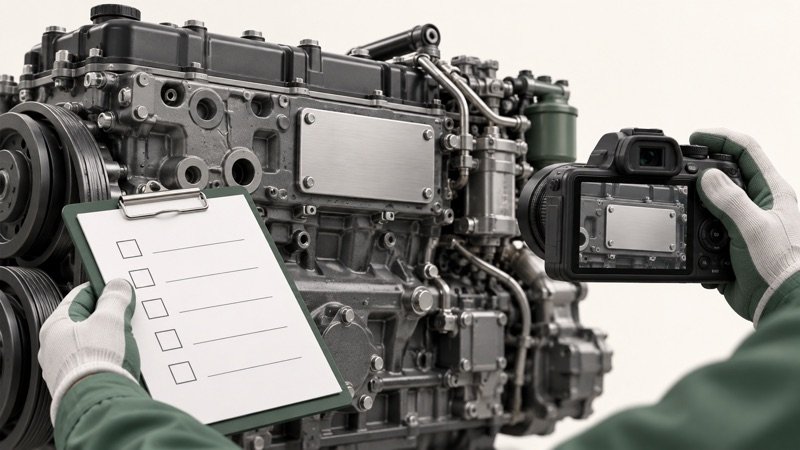
For new equipment, I ask the equipment builder or responsible engineer to define the requirements before requesting prices. For replacement work, the technical team should confirm whether the proposal matches the existing installation. Record any proposed change separately. Also obtain the documents relevant to the destination and intended use. A catalogue emission label alone should not be treated as proof that the proposed installation is approved there.
What does the quoted engine package actually include?
I compare packages through an inclusion list. Weichai’s official aftermarket range distinguishes engines, base engines and short blocks. Those labels are useful starting points. They do not answer every question about a supplier’s offer. Ask whether the quotation includes injection equipment, turbocharger, starter, alternator, flywheel housing, sensors and the relevant controls. Identify exclusions explicitly. The word “complete” should never do the work of an entire packing list.
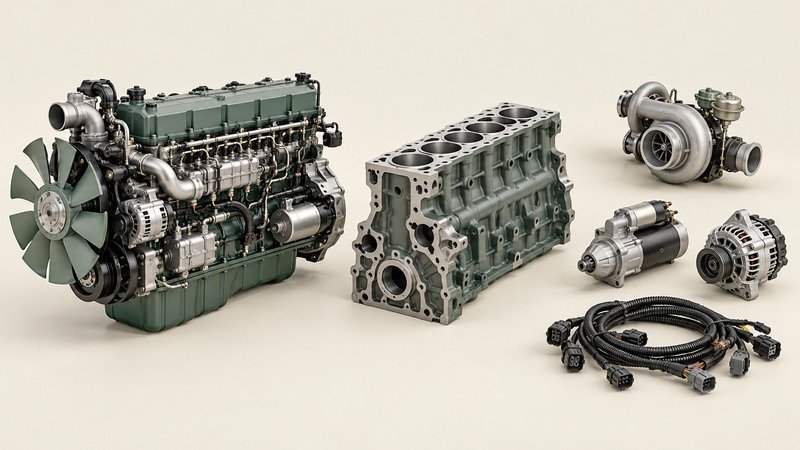
If the workshop intends to reuse existing equipment, list those items and ask the technical team to assess their condition and suitability. Include the work, additional parts and responsibility for completing the assembly in the comparison. A lower supply scope may suit one repair and complicate another. We should decide which package meets the actual job before negotiating it. I would rather buy a defined assembly than discover its missing chapters after arrival.
How do I check installation interfaces and controls?
I ask the buyer’s technical team and supplier to reconcile the installation interfaces in writing. Useful inquiry items include mounting locations, flywheel and housing details, intake and exhaust connections, cooling arrangements and accessory layout. Request the relevant drawings and clear photographs. For electronically controlled proposals, ask about the ECU, wiring harness, sensors and required integration. An attractive engine photograph is a helpful introduction; it is a poor substitute for an interface review.
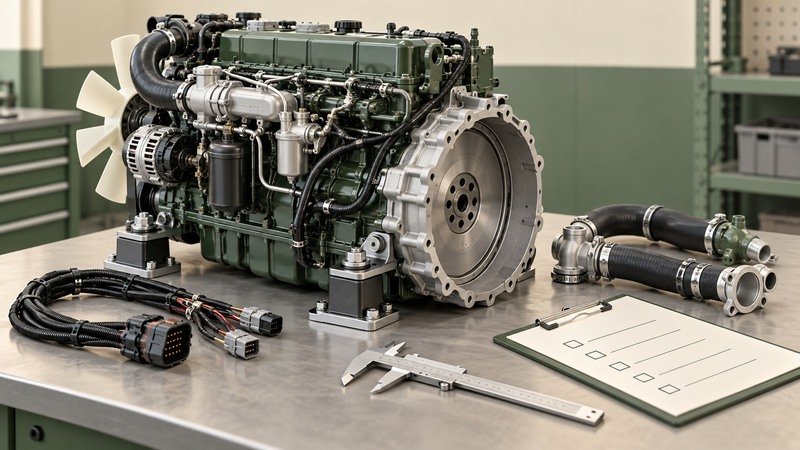
I also ask how the proposed rating relates to the intended work. Record rated power and speed, operating duty and any relevant site conditions for technical review. Do not substitute a truck application description for a stationary equipment requirement. If a supplier claims better fuel economy or performance, request the applicable model data and test conditions. We can compare documented proposals without promising that a headline figure will become the buyer’s operating result.
How do I compare engine quotations and long-term value?
I compare prices only after the model, condition and scope are aligned. Put engine cost, required additional equipment, preparation, packing and transport into separate rows. ICC’s Incoterms 2020 guidance explains how trade rules allocate costs, risks and responsibilities. Where a rule is agreed, record its version and named delivery point. A factory collection price and a delivered offer belong in the same worksheet, but require adjustment before they can compete fairly.
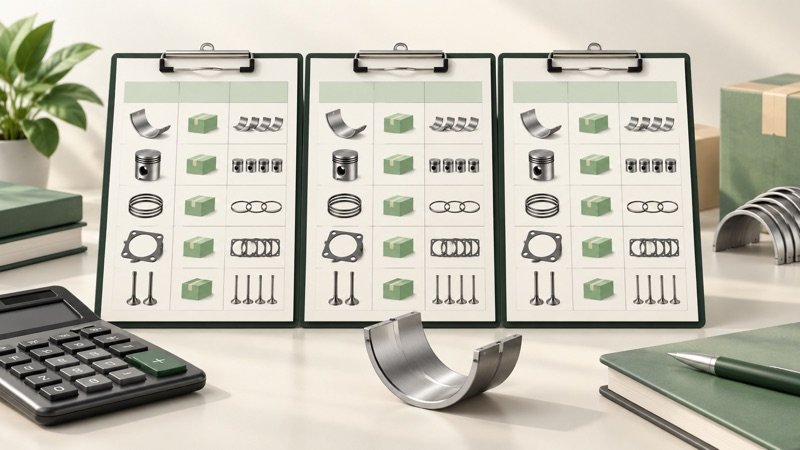
I then consider what happens after installation. Weichai’s official TCO approach covers buying, operation, maintenance, repair and replacement. For our comparison, I ask about model-specific service parts, available manuals, technical contacts and the agreed support process. Installation estimates should come from the people doing the work. Unknown costs stay visible as pending items. The cheapest quotation deserves a proper comparison, not automatic applause or automatic suspicion.
| Comparison line | What I need confirmed |
|---|---|
| Engine specification | Exact model, application, rating and configuration |
| Supply scope | Included equipment, exclusions and reused components |
| Installation | Technical review, required work and estimated costs |
| Shipment | Packing, freight scope, named delivery point |
| Support | Acceptance evidence, service contacts, written warranty route |
What evidence and acceptance terms should I request?
I ask the supplier to state whether the offered engine is new, remanufactured or used, and to connect the supporting records to the actual unit. Request identification photographs and the relevant origin or condition evidence. Agree which inspections or tests will support acceptance and who will perform them. If a report is supplied, check its unit identification, date, scope and result. A generic document should not answer a question about a specific engine.

For warranty, I request the written terms for this offer: responsible party, coverage, start date, exclusions, claim procedure and supporting evidence. Ask how an overseas claim will be handled and who bears the agreed associated costs. Do not assume that a manufacturer’s advertised service programme automatically covers a particular resale. I also agree the response if the delivered configuration differs from approval. Clear responsibility is more useful than a reassuring adjective beside “warranty.”
What should I confirm before approving overseas shipment?
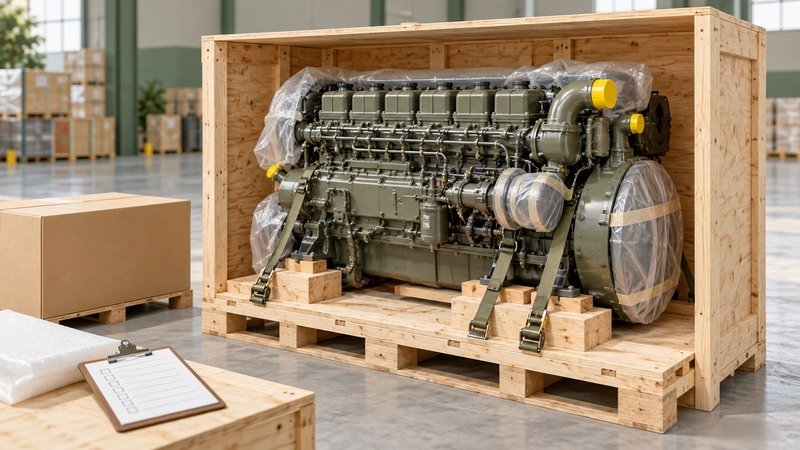
Before shipment, I confirm the packing proposal, preservation arrangements, lifting or handling information and dispatch documents. Ask for the packed weight and dimensions, destination, estimated shipping date and quotation validity. These are among the useful fields in the International Trade Administration’s pro forma invoice guidance. Match the order’s delivery responsibilities to the actual transport plan. An estimated dispatch date should remain distinguishable from an agreed arrival commitment.
Send us the structured RFQ below through our contact page. We can use it to clarify the inquiry and unresolved questions. Before approval, reconcile the final quotation with the technical review, scope list and commercial terms. Record substitutions and exclusions in one confirmed version. If repair is also being considered, our Weichai parts buying guide provides a separate checklist for component purchasing. Compare the two routes using the actual workshop assessment.
- Full model, existing serial number and identification photos
- Equipment application, required rating and destination
- Proposed emissions and control configuration
- Required assembly scope and items intended for reuse
- Interface drawings, unresolved checks and acceptance requirements
- Quantity, required date, packing and quotation basis
Conclusion
I would choose a documented engine configuration before choosing a discount. Confirm the model, application, supply scope and interfaces. Compare full order costs, evidence and support responsibilities. Then approve one written offer. Send us your engine details and destination to begin a clearer inquiry.