Ordering Weichai bearings sounds simple until three quotations arrive with three different meanings of set. One lists individual shells. Another omits the size. Your workshop is waiting, and the lowest price suddenly needs a translator. An unclear order can leave a buyer comparing different components instead of comparable offers. At Weichaistore, I recommend settling the identification, workshop specification and quantity before negotiating. This guide shows how we turn those details into a bearing enquiry that suppliers can answer without guesswork.
Before ordering Weichai main and connecting rod bearings, send the full engine model, serial number, old bearing markings and workshop-confirmed size. Separate main bearings, connecting rod bearings and any thrust components into itemized lines. State whether each quantity means a shell, pair or defined engine set. Ask the supplier to confirm the offered reference, size, manufacturer, contents and packing in writing. We compare prices only after these details match, and leave installation specifications to the workshop using applicable engine documentation.
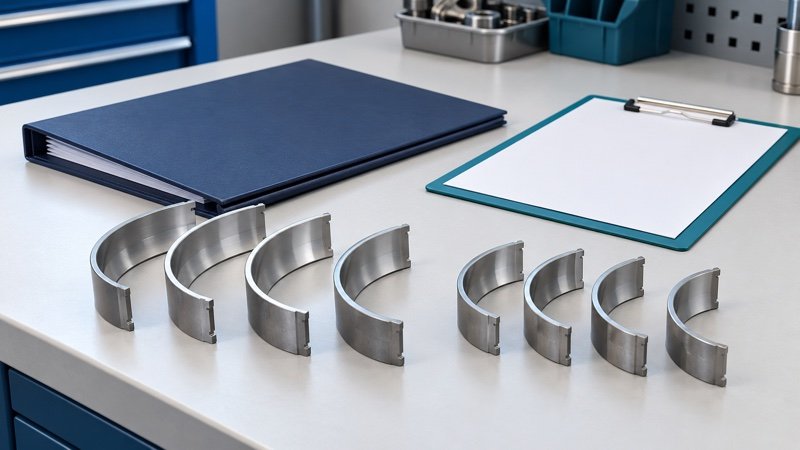
I would work through the six questions below with your buyer and rebuilding workshop. Keep one shared specification, so every quotation answers the same request and unresolved details remain visible.
What engine and bearing identification should I send?
I start with a clear nameplate photograph, the complete engine designation, serial number and equipment application. Then I request readable photographs of the removed bearing markings and its different faces. Keep the originals attached to the enquiry. Transcribe a reference exactly, including suffixes, and flag anything unreadable. A guessed character is a surprisingly expensive form of creative writing.
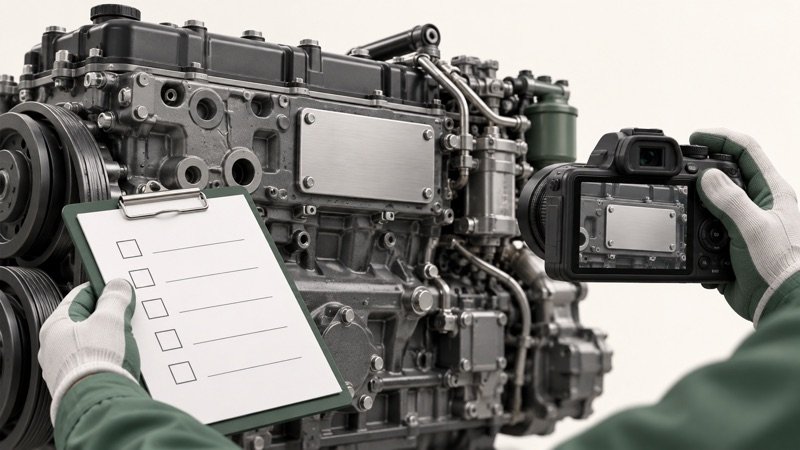
For a reference-led enquiry, our main bearing 611600010020 page and connecting rod bearing 612600030020 page provide separate starting points. I would still attach the engine information and required size. A listing title or photograph is not my approval for every engine variant. If a proposed replacement reference differs, ask for the documented basis and workshop review before accepting it.
Who should confirm STD or a repair size?
The rebuilding workshop should confirm the required size against the actual engine condition and applicable documentation. Motorservice’s engine-bearing installation guidance explains the importance of dimensional and tolerance checks and comparison with the removed bearing. It also discusses undersize grades. These are general engineering principles, not a Weichai clearance chart. I would request the workshop’s written specification rather than choose STD or a repair grade from an attractive photograph.
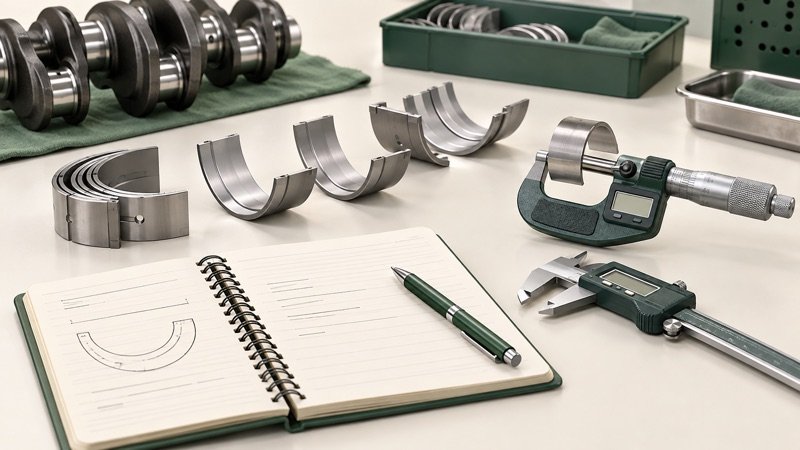
Ask the workshop to identify the component and position associated with each measurement, the units used, the repair decision and the specification it approves for purchasing. Keep any machining record with that decision. If the crankshaft work changes, reconfirm the order before release. We should not let an old quotation quietly become the newest engineering instruction. Price approval and workshop acceptance belong on separate lines.
What does a bearing set actually include?
A bearing set should mean the contents written into the offer. I ask for separate references and counts for main and connecting rod components, with any upper/lower distinctions stated explicitly. For thrust requirements, our thrust washer 61800010127 enquiry page is a separate discussion point. Do not assume that a photographed collection defines the package, or that one price automatically includes every component your workshop needs.
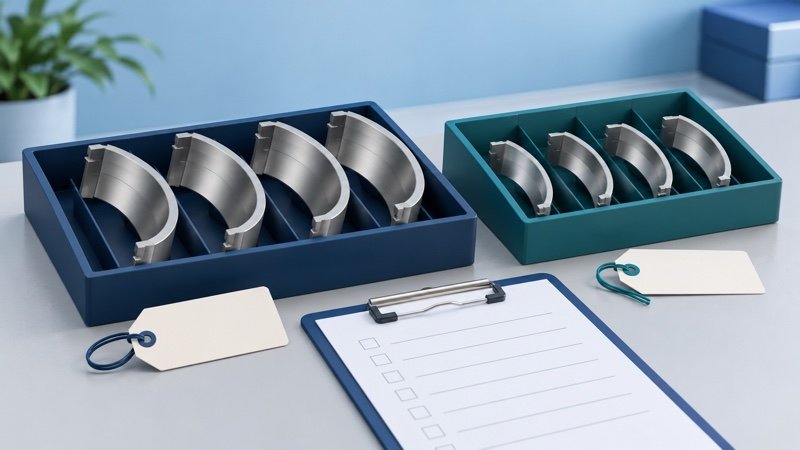
Use the table below to make the supplier’s answer countable. The required quantities must come from the approved parts list for your engine. Ask how many physical shells are supplied under each order unit, and keep different references separate. An offer for one shell and an offer for an engine set cannot become comparable merely because both spreadsheets contain the word bearing.
| Order detail | What I ask the supplier to confirm |
|---|---|
| Bearing group | Main, connecting rod and thrust components on separate lines |
| Reference and position | Exact offered number and any upper/lower distinction |
| Size | Workshop-approved designation repeated in the offer |
| Order unit | Individual shell, pair or explicitly itemized engine set |
| Physical contents | Shell counts per unit and separately listed exclusions |
Which supplier evidence should I request?
I request the proposed manufacturer or brand, current item photographs, packaging labels and available traceability documents. For goods offered as genuine, Weichai’s official parts page describes anti-counterfeit identification and a photo-verification process for dot-matrix codes. Use the applicable official route when checking those goods. An authenticity check answers a different question from whether the reference, size and quantity match this order.

Keep the evidence tied to the quoted line. I would ask which photographs show the offered goods, which are general references, and what will be supplied if an alternative is proposed. Ask the workshop what inspection evidence it needs for acceptance. Do not treat a generic certificate as an inspection of your shipment. Record unanswered questions before issuing the purchase order, then retain the agreed response with the final specification.
How do I compare quotes and protect the shipment?
We compare the same references, approved sizes, physical contents and quantities first. Then compare currency, unit and extended prices, quotation validity, payment proposal, packing and estimated dispatch. For delivery terms, ICC’s Incoterms guidance explains how its rules clarify delivery tasks, costs and risks. I would record the agreed rule, named place and version rather than leave a bare abbreviation to do all the talking.
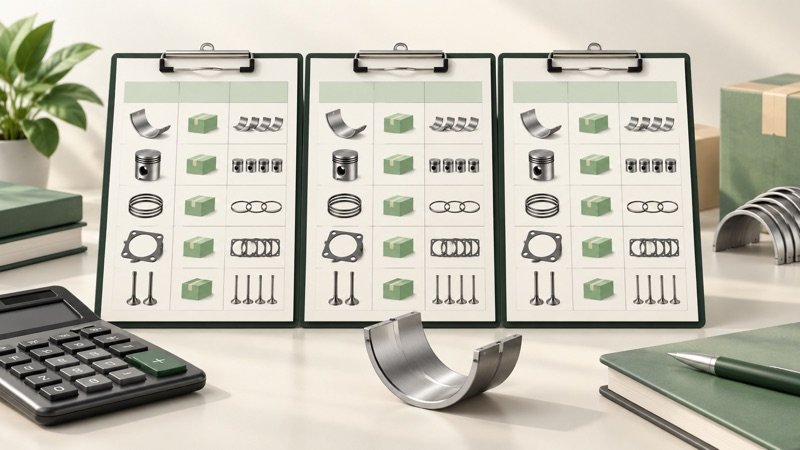
Before dispatch, ask for a packing proposal that keeps bearing surfaces protected and different sizes distinguishable. Request labels that connect each package to its order line, plus an itemized packing list. For distributor stock, I would also specify how mixed references should be separated for receiving. Confirm the proposed dispatch date in the offer. Treat it as a point to agree and track, not a delivery promise inferred from a product page.
What should my final bearing RFQ contain?
Send us one enquiry file containing the engine identification, bearing references, workshop-approved sizes, quantities and destination. Add the photographs and supporting workshop documents under matching filenames. For multiple engines, group requirements by engine identification and specification. This is our purchasing checklist, not a universal replacement schedule. The workshop decides what the repair requires; our enquiry should make that decision legible to everyone comparing the offers.
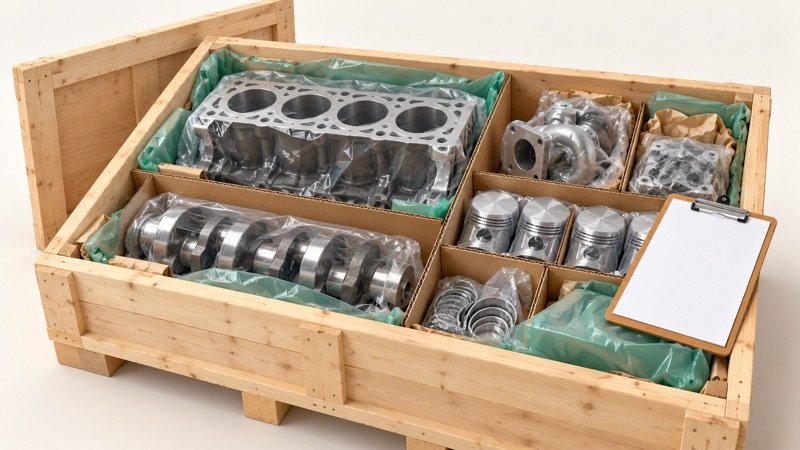
Use the checklist below as the final review before requesting a quotation. If a required field is unknown, mark it for confirmation rather than filling the gap with an assumption. After agreement, give the approved list a date or revision number. Any substitution or quantity change should be visible in the revised offer, so purchasing, receiving and the workshop can work from the same version.
- Full engine designation, serial number and application
- Exact references and clear old-part photographs
- Workshop-approved size and supporting records
- Physical shell counts and defined order units
- Proposed manufacturer, evidence and packing requirements
- Destination, requested timing and quotation scope
Conclusion
Clear Weichai bearing orders begin with engine identification, a workshop-approved size and explicit shell counts. Confirm the evidence and commercial scope before comparing totals. Send Weichaistore your itemized bearing enquiry, with photographs, quantities and destination, for review.