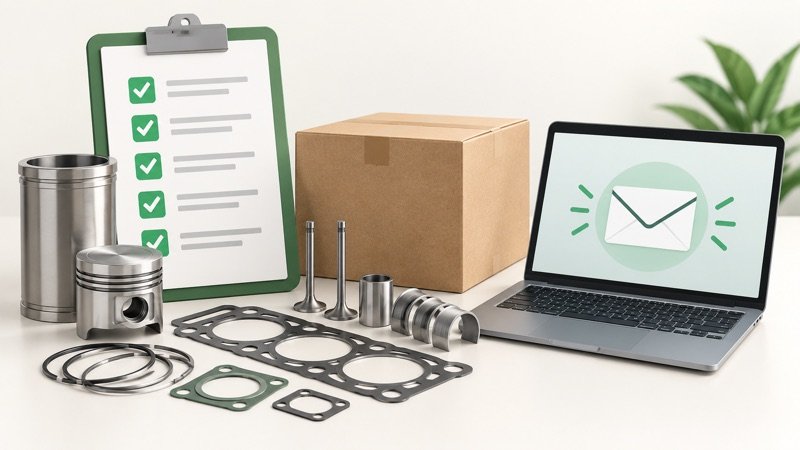
An engine overhaul can stall before a single spanner moves. The problem is often an incomplete parts order. A bearing arrives in the wrong size. A gasket kit omits a needed seal. Your workshop waits, while freight charges keep smiling. I would rather prevent that expensive comedy. At Weichaistore, we recommend building a clear, inspection based parts list before requesting prices. Here is how I would organize an overseas order, with fewer assumptions and a much more useful supplier conversation.
I start with the exact engine model, serial number, application and workshop inspection report. Then I list each component by reference, confirmed specification, quantity and unit. I ask suppliers to clearly define kit contents, identify substitutions and quote the same scope. Before dispatch, I reconcile the approved list with the packing details and agreed shipping terms. That is our practical method for preparing a Weichai engine overhaul parts list: confirm the repair requirements first, then compare offers and approve shipment.
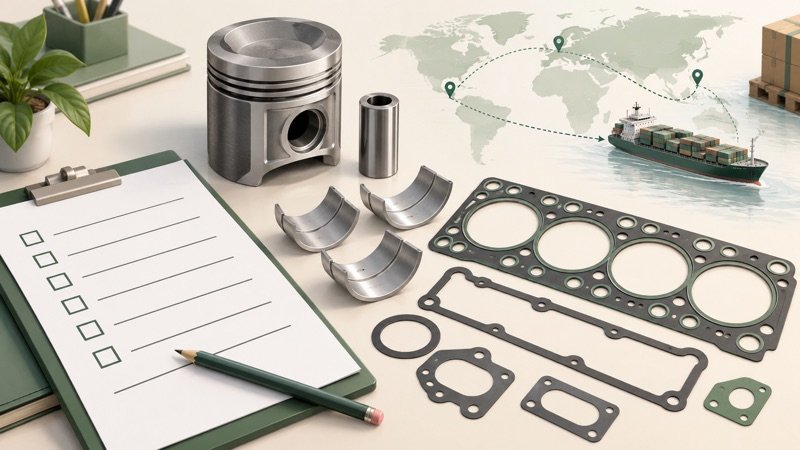
I break the job into six buying decisions. You do not need to become an engine designer. You need a quotation that your workshop and supplier understand the same way.
What engine information should I collect before asking for prices?
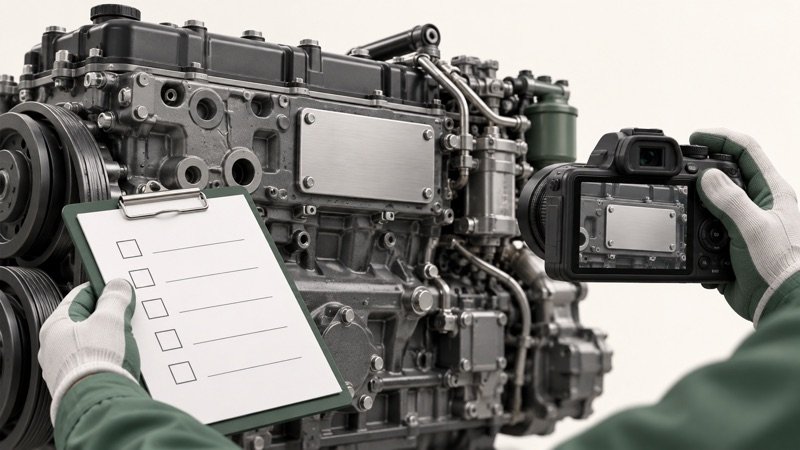
I ask for a readable engine nameplate photo, the complete model designation, the serial number and the equipment application. Add photographs of the old components and their markings where available. Keep those details attached to one job file. A family name such as WP10 helps start the conversation, but I would not use it as the entire purchase specification. If several engines are involved, separate their lists until their configurations have been checked.
Next, I ask the workshop to mark every line as reuse, inspect further or replace. For components still awaiting assessment, I record a pending decision rather than guess. This prevents a familiar part number from becoming a very confident mistake. My preferred line item includes the component name, requested reference, required specification, quantity and supply scope. We can discuss a supplier’s proposed alternative, but it belongs in a separate field and needs approval before the order changes.
Who should confirm bearing sizes and set quantities?
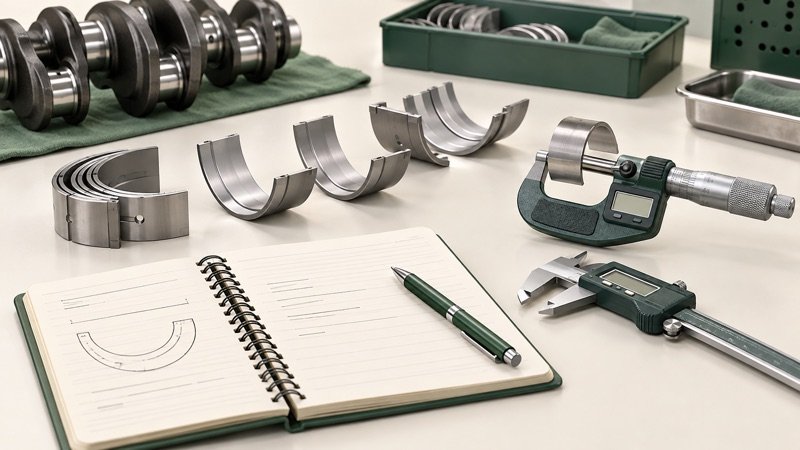
I leave repair dimensions to the qualified workshop and the applicable engine service documentation. Measurements and any machining decision must come before choosing standard or repair size components. A supplier should receive the confirmed requirement, not an instruction to pick whatever looks closest. For a main bearing inquiry, I would state the required size or grade and the intended configuration. A product reference alone is not a substitute for the workshop’s repair assessment.
Units also deserve more attention than they usually get. Write pieces, pairs, sets per cylinder or sets per engine, as appropriate. Then ask what each set contains. For piston ring sets, clarify both the contents and the number of sets requested. A photograph showing several items does not define the invoice quantity. I also keep the workshop’s requested quantity separate from the supplier’s packing unit. Otherwise, “one set” can turn into a small international mystery.
Does an overhaul gasket kit cover the complete repair?
I treat the word “kit” as an invitation to ask another question. It is not a bill of materials. Request an itemized inclusion list for an overhaul gasket kit, then compare it with the workshop’s sealing requirements. Do not assume that every disturbed seal is included. Record missing gaskets, seals or associated items as separate lines. This approach gives both sides a clear supply boundary before anyone compares the kit price.
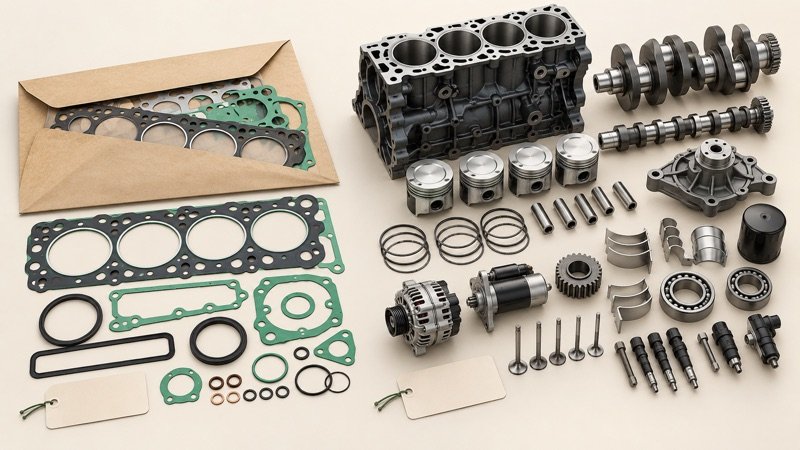
The same discipline applies to broader overhaul packages. Ask which pistons, liners, rings, bearings and other components are included, if any. For a cylinder head offer, distinguish a bare head from an assembly and list the supplied components. I would organize the order into cylinder components, bearings, sealing items, head components, and lubrication or cooling parts required by the inspection. These are planning groups, not a universal instruction to replace everything. The workshop decides the actual repair scope.
How do I check quality claims without collecting decorative certificates?
I ask the supplier to identify the offered brand, manufacturer and condition in writing. Then I request evidence relevant to that claim and to the specific components being supplied. Clear photos, references, inspection information and traceability details are useful when they can be connected to the order. A glossy certificate with no identifiable issuer or scope is mostly excellent office decoration. If approval depends on a document, verify it with its issuer rather than trusting the attachment.

For parts offered as genuine, Weichai’s official parts guidance describes exclusive anti-counterfeit marks and an overseas photo verification process for dot matrix codes. I recommend using that process where applicable and checking what the result establishes. It does not replace fitment checks, repair measurements or agreement on the supply scope. Packaging appearance alone is not our acceptance test. Keep any verification record with the relevant order line, and investigate mismatches before the goods are approved.
How can I compare quotations on the same basis?
I build a comparison sheet with the same requested items and units for every supplier. Each response should show the offered reference, specification, brand, condition, quantity, unit price, availability and exclusions. Ask the supplier to highlight every difference. A cheaper total may simply leave out a required item or count a set differently. That is not a bargain yet; it is an unfinished comparison. We should settle those differences before treating the totals as comparable offers.
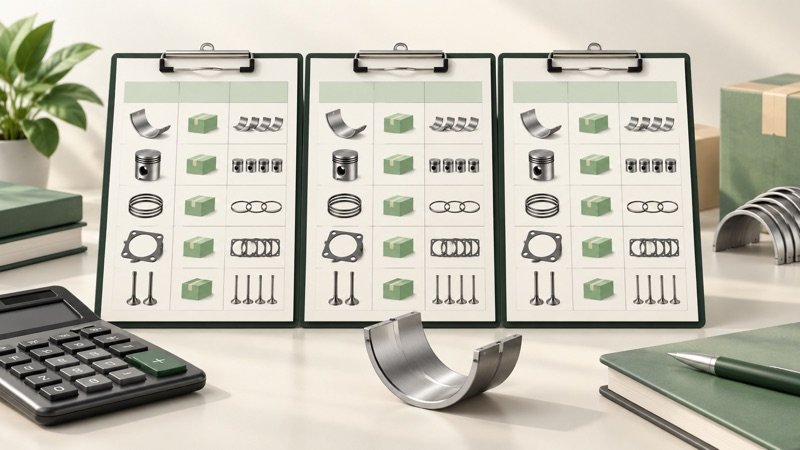
I also separate product price from packing and shipping charges. Write down the agreed delivery term, named place and version where an Incoterms rule is used. ICC’s Incoterms 2020 guidance explains how the rules allocate costs, risks and responsibilities. Ask for separate confirmation of the payment terms, promised dispatch date and any documentation you need. These details belong in the approved offer. They should not live only in a cheerful message saying, “No problem, my friend.”
What should I approve before the parts leave for shipment?
I want the packing list to reconcile with the approved order line by line. Check references, quantities, set definitions and any agreed substitutions. Ask for packing information and photos appropriate to the shipment, especially for heavy, exposed or vulnerable components. Discuss separation, protection against damage and corrosion, and clear package identification. Confirm the destination and any urgent items. A requested delivery window is a planning requirement; it is not a reason to invent an impossible promise.
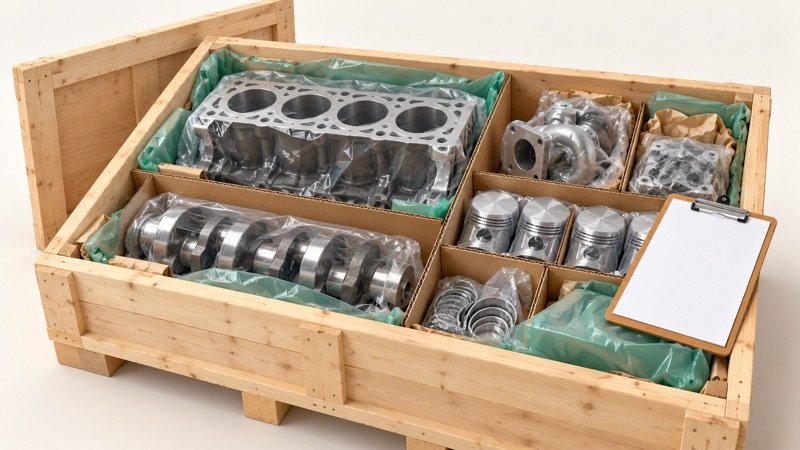
Before approval, I return every unresolved specification to the workshop or supplier. If a requirement changes, update the controlled list and obtain matching confirmation. Do not let an old spreadsheet travel alongside a new quotation and hope they become friends. To request an offer from us, send the engine identification, inspection based list, confirmed sizes, units, quantities and destination through our contact page. Mark pending decisions clearly. That gives us a useful starting point for a practical discussion.
Conclusion
I would rather clarify one line today than explain a missing part after arrival. Confirm the engine, repair requirements, kit contents and commercial terms. Then send us the approved list. A good overhaul order begins with clear information, not a heroic guess.