Your Weichai parts shipment arrives, and the workshop wants everything yesterday. One carton looks tired. A label differs from the order. If those details disappear during unpacking, a simple clarification can become a lengthy argument about what arrived. I would rather spend time recording facts than hunting for discarded packaging. At Weichaistore, our receiving checklist helps overseas buyers keep delivery evidence, part identity and workshop decisions connected. The delivery truck has finished its job. Your acceptance process has only started.
My Weichai parts receiving inspection starts with shipment photographs, then reconciles each order line against the purchase confirmation and packing list. I record quantities, label numbers, visible markings, condition and any missing kit components. Questionable items stay identified and separate while we request written clarification. Genuine-part verification addresses origin; it does not establish compatibility. Before installation, the responsible technician must confirm the exact application and required checks. Receiving a parcel, accepting its contents and approving installation are three separate decisions.
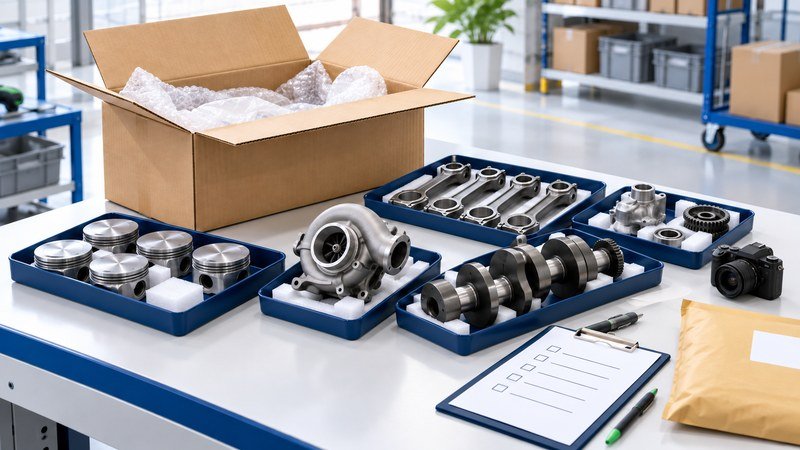
I use the following workflow for procurement teams, distributors and repair workshops. It turns an unpacking session into a usable record, without asking warehouse staff to perform an engine diagnosis.
What Should I Record Before Opening the Shipment?
I start with the order reference, delivery date, carrier, tracking reference and package count. Photograph each carton or crate before disturbing it, especially wet areas, punctures or crushed corners. For UPS shipments, its supporting-document guidance requests images of the damaged item in its packing, the shipping label and the package exterior. Use your actual carrier’s requirements; this example is not a universal claims procedure.
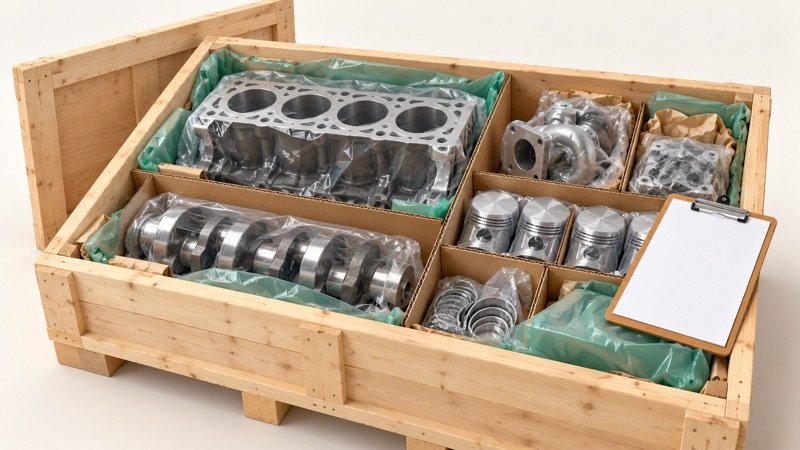
I keep the purchase confirmation, invoice and packing list together. The International Trade Administration describes a packing list as an itemized account of package contents, weights and dimensions. Its commercial-invoice guidance explains the invoice’s customs role. For receiving, I use these documents alongside our agreed order scope. A tidy folder beats five people searching five inboxes while a mechanic waits.
How Do I Reconcile Quantities and Kit Contents?
We count by order line and agreed unit of supply. A box, a pair, a cylinder set and a complete kit can mean different things. I compare received components with the approved contents list, including agreed accessories. I also record partial deliveries against the correct shipment reference. Our Weichai parts purchasing checklist helps buyers define these details before dispatch, when clarification is usually easier.
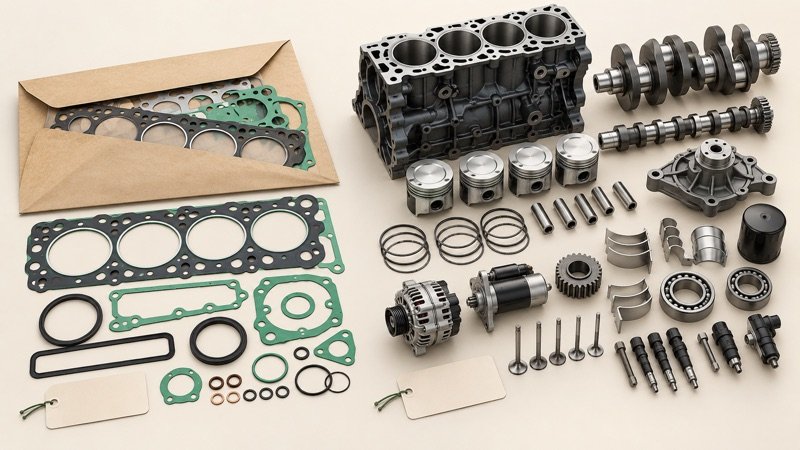
My receiving record uses the fields below for every affected order line. These are suggested workflow fields, not a manufacturer inspection specification. For a hypothetical shortage, I would write ‘two units received against three ordered’ and identify the carton involved. That gives us something actionable. ‘Parts missing’ is a useful alarm, but it is a poor investigation file. Keep the original observation and later resolution in separate entries.
| Record field | What I write down | Follow-up |
|---|---|---|
| Shipment | Order, tracking, arrival date, carton reference | Link photos to the delivery |
| Quantity | Ordered and received units; partial shipment | Identify the exact shortage |
| Kit scope | Agreed components and items received | List missing contents separately |
| Identity | Ordered number, label number, component marks | Request a documented explanation |
| Application | Engine model, serial number, intended use | Confirm the exact fitment |
| Condition | Package and item observations; photo filenames | Retain the affected packing |
| Status | Open issue, owner, dated response, next step | Keep technical approval separate |
What If Part Numbers or Engine Details Do Not Match?
I copy the complete number from the package label and every relevant visible marking on the component. Photographs should show which item each number belongs to. I keep the intended engine model, serial number and application beside that record. A short family name such as WP10 helps organize a conversation. For release decisions, I still request confirmation against the exact engine and ordered component.
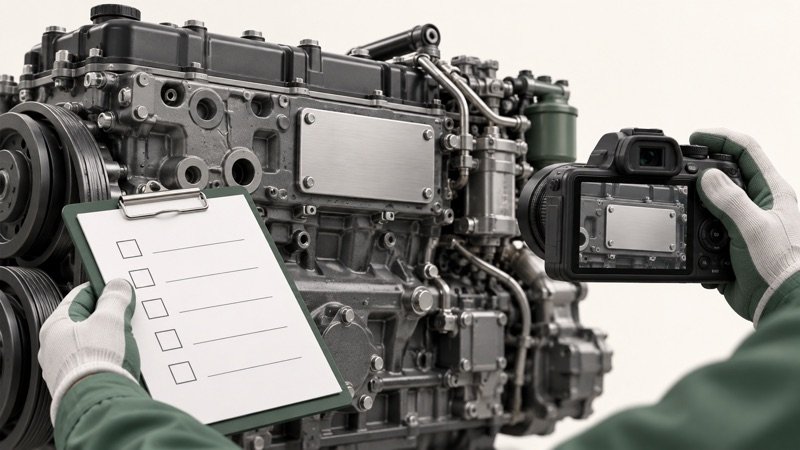
If a label number differs from the order or component marking, we hold the affected item for clarification. I ask the supplier to explain the difference in writing and identify any proposed replacement with supporting application information. I do not approve a substitution because two photographs look similar. Our parts catalogue can help locate a product enquiry, but a catalogue photograph cannot resolve that discrepancy.
How Should I Check Visible Condition and Preserve Evidence?
In a clean receiving area, I record visible chips, cracks, dents, corrosion, damaged threads or disturbed protective caps where observable. I photograph the part before removing evidence or rearranging its packing. For a sealed item, I document the seal and follow the agreed inspection procedure before opening it. This is a visual receiving screen. It cannot replace the component’s required dimensional, functional or assembly checks.
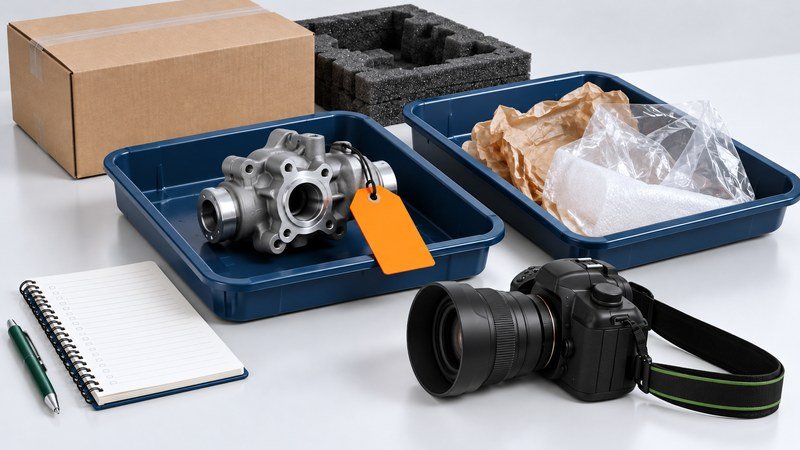
I separate questionable items and keep their labels, wrapping and carton associated with them. I avoid polishing a marked surface, washing away a stain or trying installation to settle an identity dispute. Record observations instead of guessing causes: ‘dent visible at unpacking’ is more useful than an unsupported accusation. My camera should document the question, not stage the answer. A qualified technician can assess the component using the applicable service information.
How Do I Verify Genuine-Part Claims Without Assuming Fitment?
When the order specifies genuine Weichai supply, I compare that requirement with the delivered identification and supplier documents. Weichai’s official parts verification guide describes anti-counterfeit marks and an overseas dot-matrix photo-verification process. I follow the current official instructions for the mark received and retain the result. An unreadable code or unclear outcome needs clarification through the supplier and official support route, rather than a warehouse guess.

We treat authenticity, ordered identity and fitment as separate questions. A verification result should stay linked to its photographed item, not another component from the same carton. I record missing evidence as unresolved. Attractive packaging alone is not my approval method. I also compare any aftermarket or remanufactured supply with what the buyer actually agreed. The receiving team should document the supplied category instead of silently changing the purchase requirement.
When Can I Release Parts for Technical Inspection or Installation?
After delivery discrepancies are resolved, I hand the identified parts and records to the responsible technician. We confirm application, relevant measurements and assembly requirements using the exact engine’s parts and service information. I do not invent a universal bearing clearance or installation torque for this checklist. Keep receiving status distinct from technical approval. Parts awaiting inspection should remain protected according to their supplied handling and storage instructions.
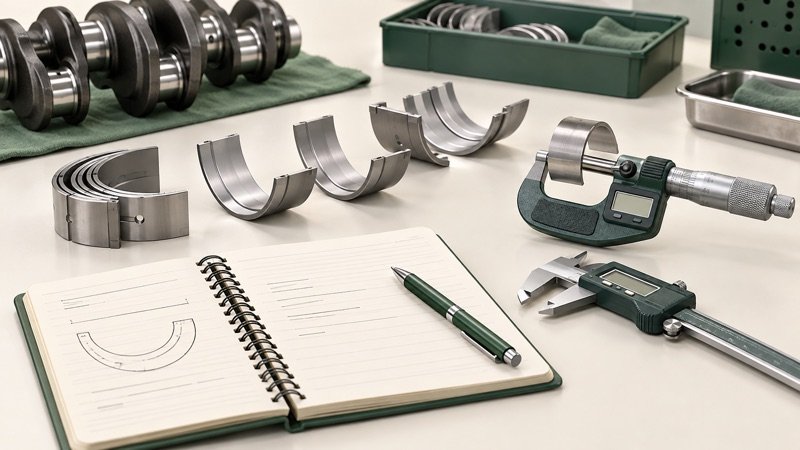
For an unresolved delivery issue, I send a concise evidence packet with the fields below. UPS’s claims guidance advises retaining damaged contents and packaging. Check the applicable carrier, insurance and purchase terms promptly for your shipment’s process and deadlines. I request a written next step, named contact and follow-up date. Evidence supports assessment; it does not automatically establish a refund, warranty entitlement or responsibility for damage.
- Order and shipment references, delivery date and affected carton.
- Part number, received markings and ordered versus received quantity.
- Precise observation and relevant item, label and packaging photographs.
- Engine identification when the issue involves application or fitment.
- Verification result, previous correspondence and the clarification requested.
- Contact responsible for the agreed next step and follow-up date.
Conclusion
I approve each step from a clear record: delivery received, discrepancy resolved, technical checks completed. Keep that record with the order. For your next purchase, send us your part numbers, engine identification, quantities and destination. We can clarify the enquiry before another carton reaches your workshop.