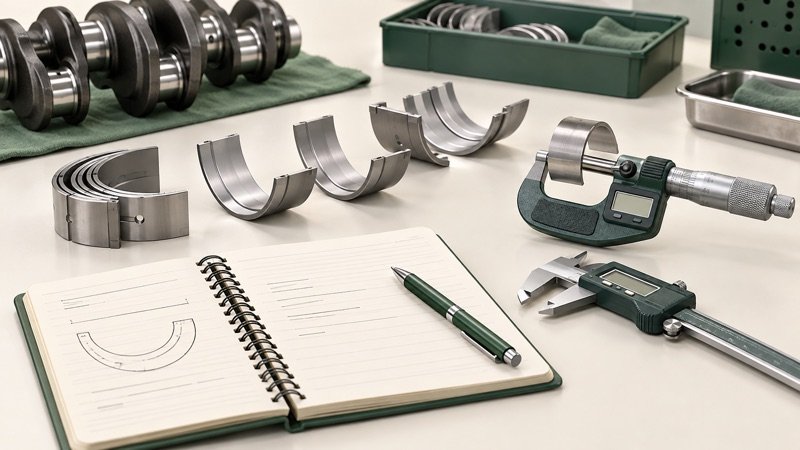
A cheaper Weichai parts quotation can become an expensive order. The problem is usually hidden in the details: a different assembly, an unclear set quantity or freight excluded from the total. Your workshop waits. Your purchasing team starts chasing answers. The spreadsheet still insists you found a bargain. I would rather help you avoid that victory. At Weichaistore, we recommend clarifying the parts and commercial terms before negotiating prices. Here is our practical approach to buying with fewer costly assumptions.
I reduce avoidable purchasing costs by confirming the exact part and engine application, comparing identical quantities and supply scopes, verifying product claims, and checking the full quoted order cost. I then weigh consolidation against repair urgency and actual demand. Before approval, I ask for written availability, packing, delivery and payment terms. This Weichai parts buying guide turns those steps into a usable RFQ. We can help clarify an inquiry, but specifications and commercial commitments must be agreed for each order.
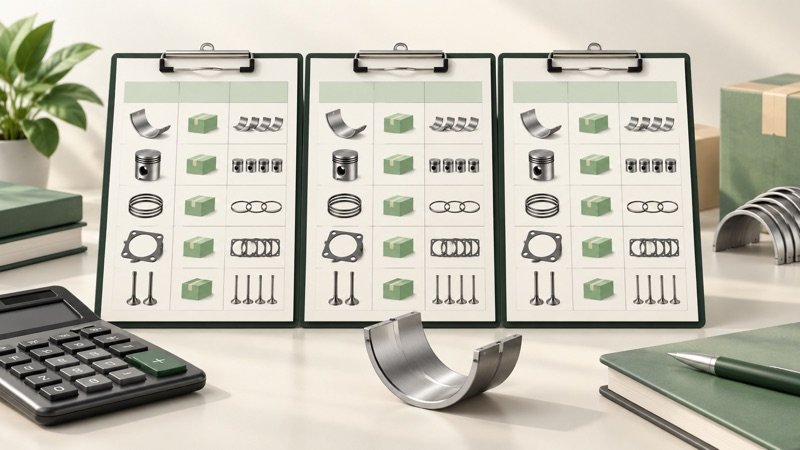
Below are six practical questions I would settle before approving a supplier’s offer. They help importers, distributors and maintenance buyers compare value without needing a second career in engine engineering.
What should I confirm before asking for lower prices?
I start with the complete part reference, engine model, serial number and equipment application. Add readable nameplate photos and clear views of the old component where available. Preserve letters and suffixes in the reference. A category such as WP10 or WD615 helps us organize an inquiry. It should not be the entire fitment check. If a digit is uncertain, mark it uncertain rather than promote a guess to official information.
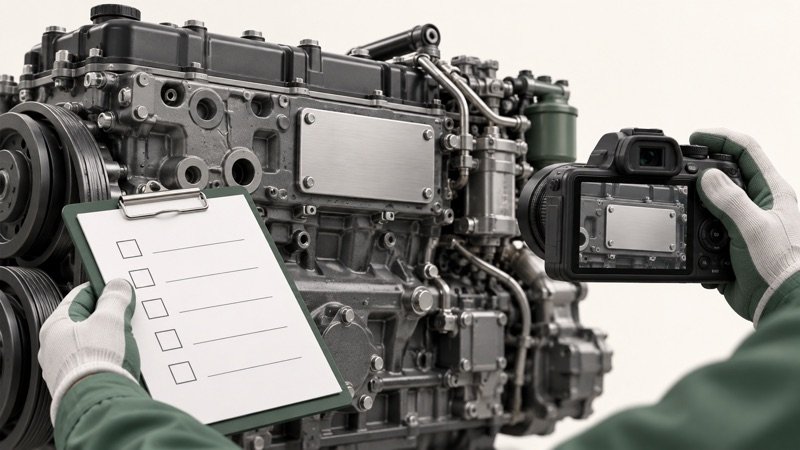
Next, I ask the supplier to state the offered reference and explain any difference from the request. A substitution needs a documented basis for the particular application and your approval. For size dependent components such as main bearings, the workshop should confirm the required specification. We should resolve these points before negotiating. The cheapest wrong part is still a wrong part, now with better marketing.
Are suppliers pricing the same item and supply scope?
I compare offers only after defining what each line includes. An individual part, a pair, a set and an assembly are different purchasing units. Ask the supplier to list associated components and exclusions. For an overhaul gasket kit, obtain an inclusion list instead of assuming that every required seal is inside. Product photographs help explain the offer, but they do not define its contractual contents.
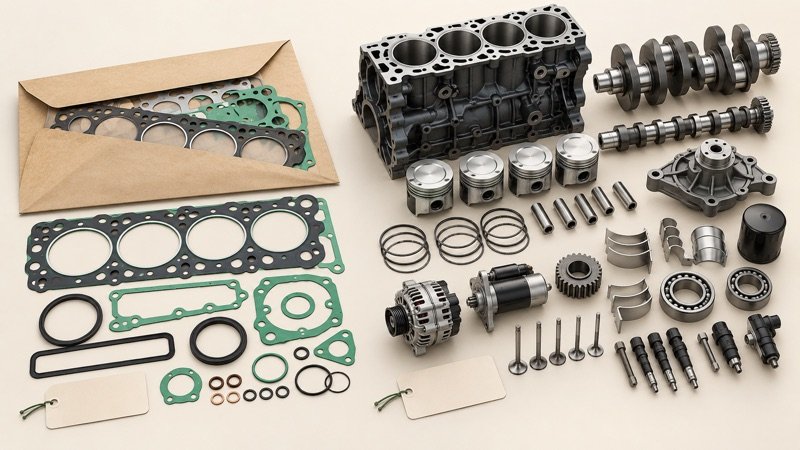
Keep requested quantity separate from packing quantity. A carton may contain several pieces, while a quoted set may cover only one repair position. Ask for the unit used on the quotation and the number of units supplied. I also record approved alternatives separately from the original request. This makes later comparisons traceable. It prevents a tidy spreadsheet from quietly comparing different products, which is surprisingly easy and rarely economical.
How do I verify product origin and quality claims?
I ask who manufactured the offered item, its condition and whether the supplier describes it as genuine, aftermarket or remanufactured. For parts offered as genuine, Weichai’s official verification guidance describes anti-counterfeit marks and overseas photo verification of dot matrix codes. Use the relevant process where applicable. Keep the result connected to the supplied item. That check supports an origin claim; it does not establish engine fitment or the required repair dimensions.

Ask for inspection or traceability evidence that matches the item and claim being made. If a certificate matters to your approval, verify its issuer, scope and relevance. A file named “quality certificate” is not a quality strategy. Nor should we assume that the highest price proves the best quality. I would document the agreed condition, acceptance requirements and written warranty or return terms for the actual offer. These are questions to settle, not promises to invent.
How do I compare the total cost of buying Weichai parts?
I compare the confirmed order cost, not just the headline unit price. Put goods, packing, freight and verified destination charges into separate rows. Mark every amount as included, separately quoted or awaiting confirmation. Use the same destination and delivery scope. ICC’s Incoterms 2020 guidance explains how the rules allocate costs, risks and responsibilities. Where a rule is agreed, record its version and named place rather than leaving the delivery term incomplete.
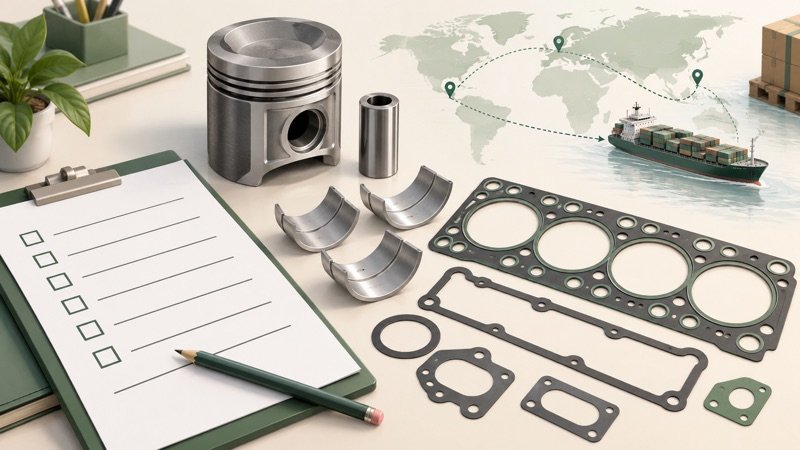
The International Trade Administration’s pro forma invoice checklist includes item prices, shipment details, payment terms, the estimated shipping date and quote validity. I use these fields as a useful comparison structure, not as a destination-specific import ruling. Ask the supplier to explain excluded charges and confirm the quotation’s currency. If an amount is unknown, keep it visible. A missing cost is an unanswered question, not a convenient zero.
| Cost line | What I ask suppliers to confirm |
|---|---|
| Goods | Same reference, specification, unit and quantity |
| Packing | Included protection and any separate packing charge |
| Transport | Service, destination and quoted freight scope |
| Destination charges | Verified responsibility and amounts still pending |
| Offer terms | Currency, validity, exclusions and payment conditions |
When does consolidating an order actually make sense?
I would request separate offers for a combined shipment and, where necessary, an urgent partial shipment. Compare the actual packing and freight proposals before choosing. Consolidation can be worth considering when requirements and timing align, but it does not guarantee a saving. Waiting for one delayed line may hold up an otherwise ready order. Ask which items are available and which are pending, then make the dispatch priorities explicit.
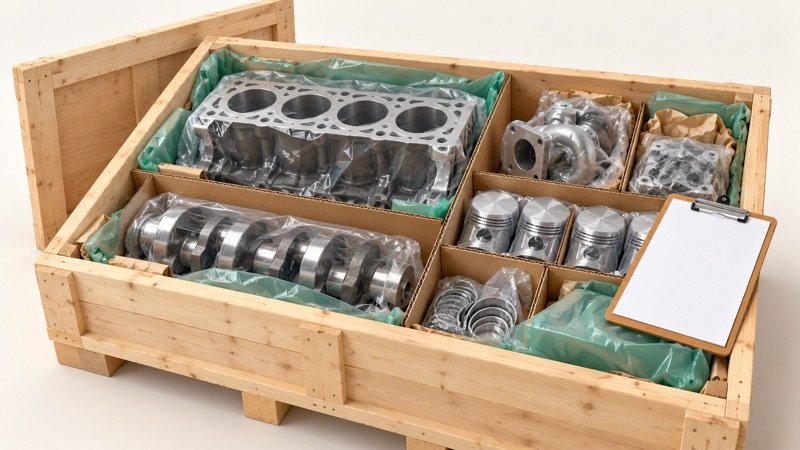
For distributors, I would connect order quantities to actual demand, repair needs and existing stock. A quantity discount deserves scrutiny if it requires buying more than you can reasonably use. Ask for price breaks, minimum quantities and packing units in writing. Keep slow or uncertain lines separate during planning. I prefer a clear replenishment decision to a warehouse full of enthusiastic guesses. Bulk buying is a tool; it should not become the purchasing objective.
What should I put in the RFQ and final approval?
Send us a structured inquiry through the Weichaistore contact page. Identify the engine, requested items, quantities, destination and required date. Include available photos and mark unresolved specifications. You can also browse our engine parts catalogue to describe the components you need. I recommend using a consistent RFQ format so each supplier answers the same questions. It makes price discussions shorter and approval decisions clearer.
- Requested part, reference and quantity
- Full engine model and serial number
- Equipment application and destination
- Photos, specifications and unresolved questions
- Required date and packing requirements
- Requested quote inclusions and exclusions
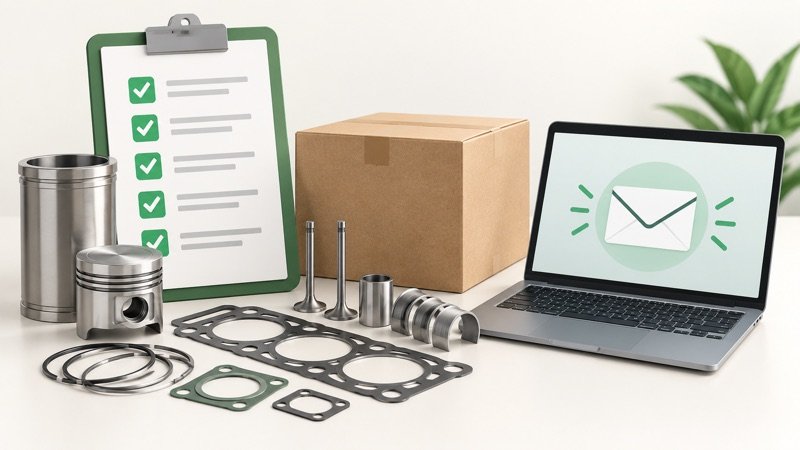
Before approval, reconcile the quotation with your requested list. Check references, units, contents, condition, availability, payment terms, dispatch estimates and the agreed delivery scope. Ask what happens if the supplied item differs from the approved order. Keep changes in one controlled version and obtain matching confirmation. A quotation in email, another in a spreadsheet and a third in chat should not compete for the title of “final.” Confirm which version governs the purchase before dispatch.
Conclusion
I would rather clarify an order before paying for avoidable confusion. Confirm the part, compare equal supply scopes, verify relevant evidence and check the full quoted cost. Then approve written terms and send us a clear inquiry. That is practical purchasing discipline, not a discount trick.