A low generator price can look excellent until an overseas buyer discovers that the quotation leaves questions unanswered. Is that power figure prime or standby? Does the canopy meet the site’s noise requirement? Is the transfer equipment included? Suddenly, the bargain has its own accessories catalogue. I prefer to resolve those questions before money changes hands. At Weichaistore, we recommend comparing the complete generator configuration, operating requirements and commercial scope. This guide turns an attractive offer into a clearer purchase.
I choose a Weichai-powered generator by defining the electrical loads, operating duty and site conditions first. I then request the engine and assembled genset models, confirmed electrical ratings, supply scope and supporting data. I compare equivalent quotations, including delivery responsibilities, installation requirements and the written support route. Before approval, I reconcile the technical review, acceptance plan and final offer. The right purchase is a documented package that suits the application, rather than a discount attached to an unexplained power number.
Below are six decisions I would settle with the buyer, supplier and responsible technical team. We will compare usable specifications and clear responsibilities, while keeping the procurement paperwork pleasantly manageable.
Which loads and electrical requirements should I define first?
I start with a load schedule, rather than a preferred catalogue size. List equipment, running demand, starting method and which loads operate together. Cummins’ generator application manual explains that motors, UPS equipment, variable frequency drives and transient limits affect sizing. This is general engineering guidance, not a Weichai-specific performance claim. Ask the responsible engineer and proposed set assembler to confirm the selection for the actual project.
Our RFQ should state the required frequency, voltage, phase arrangement and operating duty. Include site altitude, temperature, installation location and expected hours of use. Ask about existing electrical distribution and any future loads the engineer wants considered. Do not assume that a familiar engine name settles those requirements. A clear load schedule gives suppliers a common brief. It also prevents the cheapest offer from winning a competition with three different finish lines.
How do I compare complete-generator power ratings?
I keep engine power and complete-generator output separate. Weichai’s official Energy & Power overview distinguishes generation engines in kWm from generator sets in kWe. Request the assembled set’s electrical kW, kVA and declared power factor at the required duty. The Cummins manual gives the relationship kW = kVA × power factor. Use the confirmed rating and load information; do not assume one power factor applies to every generator or application.
For a concrete example, Weichai Group’s published WPG250L8 table lists standby power of 250 kVA/200 kW and prime power of 225 kVA/180 kW, with a Baudouin 6M12G6D3/5 engine. This specific example shows why the rating label matters. It does not describe our inventory or every Weichai-powered set. Ask the supplier to confirm the proposed model’s rating definition, duty limits and output under the buyer’s site conditions.
What should the quoted generator package include?
I ask for a package list identifying the engine, alternator, controller, breaker, cooling system, starting equipment and fuel arrangement. Add the base frame, canopy and exhaust items where required. Record each make, model and inclusion. A Weichai engine inside an assembled set does not identify every other component. Ask who assembles the package and who takes responsibility for its documented configuration. The word “complete” deserves a list, not a standing ovation.
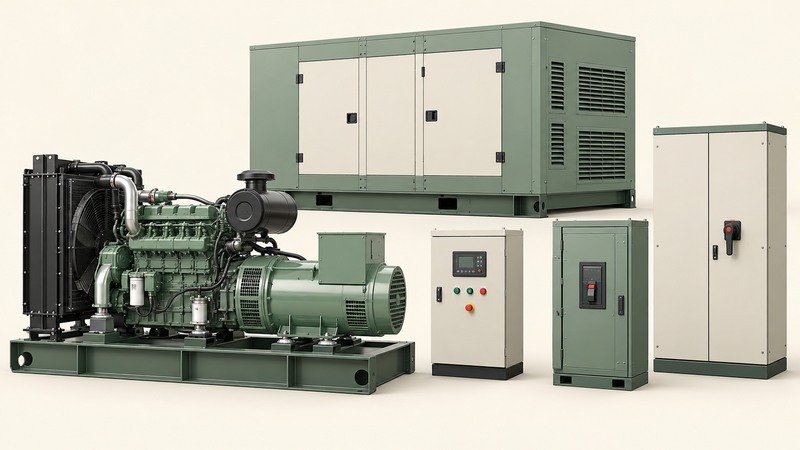
Specify whether automatic transfer equipment, remote monitoring, heaters, batteries and connection accessories are included, optional or excluded. If automatic transfer is required, have the electrical team review the proposed arrangement and interfaces. Identify the supplier’s work separately from site installation, cabling and commissioning. We should also distinguish an open set from a sound-attenuated package. This scope list makes later substitutions visible and prevents a photograph from quietly becoming the entire purchase specification.
How do I check noise, fuel consumption and site suitability?
I compare noise reports using their measurement conditions. Caterpillar’s sound-pressure guidance explains measurements at fixed distances around a set and appropriate logarithmic averaging. Request dB(A), distance, operating load, measurement positions and the tested configuration. Ask the buyer’s technical team to assess the installed site’s requirement. A “silent” label is not a measurement. Even the best canopy cannot negotiate with an unspecified noise limit.
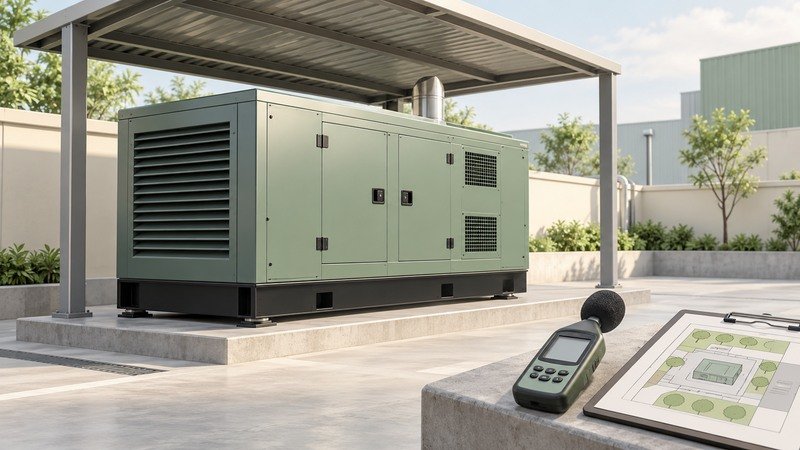
For fuel comparisons, I request data for the exact proposed package at relevant loads, with units and test conditions stated. Ask which operating assumptions support any consumption estimate. Cummins’ manual also explains that altitude and temperature affect engine, alternator and cooling performance. Obtain the proposed assembler’s confirmation for this installation. Review ventilation, exhaust and maintenance access with the technical team. We can compare documented operating costs without inventing a universal fuel saving or guaranteed noise result.
| Comparison item | What I need confirmed |
|---|---|
| Electrical requirement | Load schedule, frequency, voltage, phases and duty |
| Complete-set rating | Model, electrical kW/kVA, prime or standby and site conditions |
| Supply scope | Engine, alternator, controls, canopy, options and exclusions |
| Operating data | Fuel units and load points; noise distance and test configuration |
| Total order cost | Equipment, packing, transport, site work and support scope |
How do I compare costs, acceptance evidence and warranty terms?
I compare prices after the technical requirement and package scope match. Separate equipment, options, packing, transport and site work in the worksheet. ICC’s Incoterms 2020 guidance explains how trade rules allocate costs, risks and responsibilities. Record the agreed rule, version and named delivery point. Ask for estimates from the parties responsible for excluded work. An unknown cost stays marked as pending; it should not disappear merely because the quotation has an attractive total.
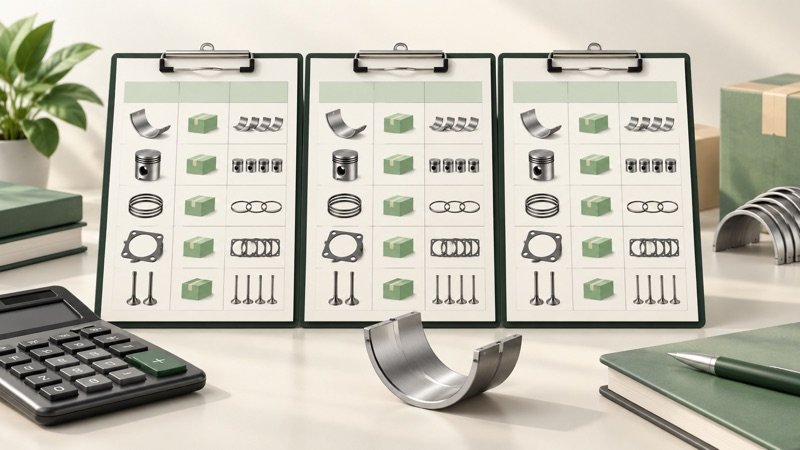
Before approval, agree the inspection or test scope and the evidence required for acceptance. Request records linked to the actual assembled set, including its identification and agreed configuration. Define how discrepancies will be resolved. For warranty, request the responsible party, coverage, start date, exclusions, claim process and allocation of overseas service costs. A component manufacturer’s name does not settle the package warranty. I prefer a usable support route to a confident adjective followed by a signature.
What should I confirm before overseas dispatch?
For dispatch, I confirm packing, handling information, packed dimensions and weight, documents and destination. The International Trade Administration’s pro forma invoice guidance includes item prices, payment terms, delivery point, estimated shipping date and quotation validity. These are useful comparison fields. Distinguish the estimated dispatch date from any agreed arrival commitment. Reconcile shipment responsibilities with the transport plan, then confirm who handles installation and acceptance after delivery.

Send the RFQ below through our contact page. We can use it to clarify the inquiry and outstanding questions. If the project involves replacing only an engine, our Weichai engine buying guide covers that separate scope. For maintenance orders, consult our Weichai parts buying guide. Before placing a generator order, approve one consolidated version of the specification, scope, acceptance requirements and commercial terms.
- Application, destination and quantity required
- Load schedule, starting methods and proposed operating duty
- Required frequency, voltage and phase arrangement
- Altitude, temperature, installation location and noise requirement
- Required package scope, options and installation responsibilities
- Acceptance evidence, warranty route and target dispatch date
Conclusion
I would choose the documented generator package before choosing the discount. Confirm loads, electrical ratings, supply scope and site conditions. Compare full costs and written acceptance responsibilities. Send us the application, load schedule and destination to begin a clearer overseas inquiry.