Buying ‘Weichai heavy machinery’ sounds straightforward until one quotation describes a marine engine, another describes a generator, and a third offers replacement parts. Our purchasing team cannot compare those proposals by price alone. Confusing the company, application or included assemblies can leave expensive questions waiting at the receiving workshop. I start by identifying the actual manufacturer and supply scope. Then we check documented ratings, installation needs, parts references and acceptance terms before treating any overseas quotation as ready for approval.
I source Weichai Heavy Machinery products by defining whether the requirement concerns marine propulsion, a generator set or identified replacement parts. I confirm the full model, serial number, application and included equipment. I then request current specifications, interface drawings, origin evidence and written service responsibilities. Quotes must use the same scope, delivery basis and inspection requirements. At Weichaistore, an engine or parts inquiry begins with those details; the responsible manufacturer or integrator must confirm the complete project’s technical suitability first.
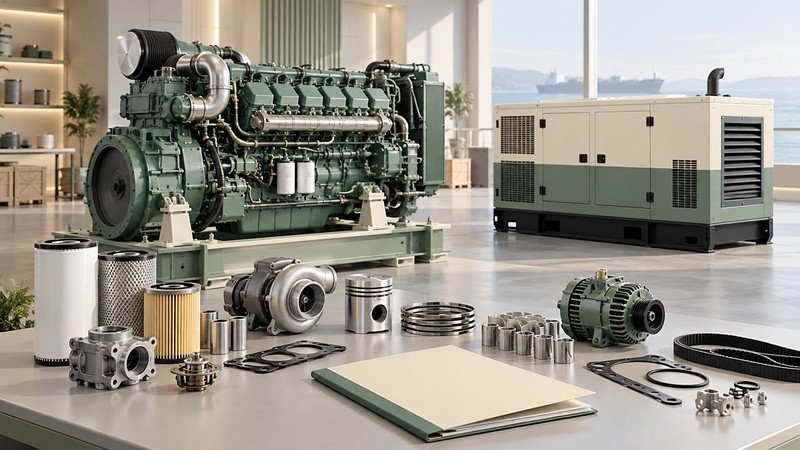
Our six questions turn a broad company name into a usable purchasing brief. The aim is a documented order, because a persuasive brochure cannot align a gearbox or identify parts.
Which company and supply scope am I actually sourcing?
I distinguish the named company from the wider group. Weichai Heavy Machinery’s official profile describes marine diesel engines, generating sets, propulsion and power integration systems, alongside aftermarket and gearbox-related business. That is the relevant starting point here. The broader Weichai Group covers additional sectors, including construction machinery. I would not transfer the whole group’s product range to one company’s quotation. Record the actual maker and seller separately.
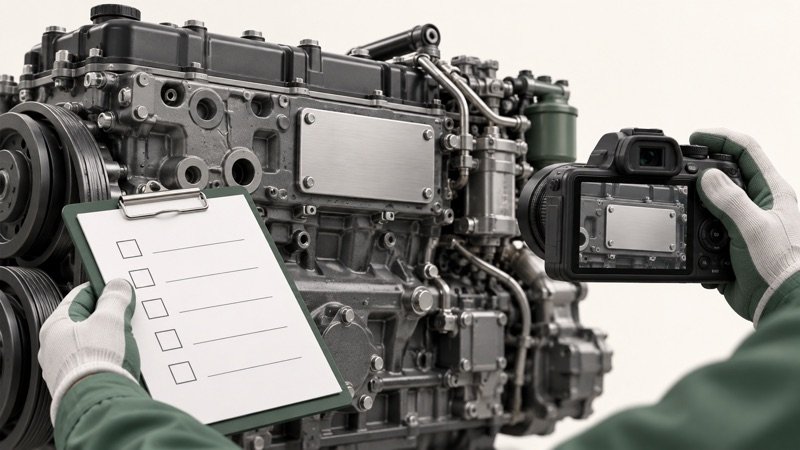
I define the purchase as an engine assembly, complete generating set, propulsion package or individual components. Ask which cooling equipment, controls, gearbox, alternator and installation services are included where relevant. Identify new, used or remanufactured condition explicitly. Our enquiry should describe the requested scope without assuming that a product listing guarantees availability. A photograph of a large engine is an excellent conversation starter. It is a rather poor bill of materials.
Is the requirement for marine propulsion or electrical generation?
I separate marine propulsion from electrical generation before comparing ratings. The official 170-series marine page lists X6170ZC450-1 at 330 kW and 1000 rpm, while X6170ZC450-2 is listed at 330 kW and 1200 rpm. Equal power does not erase that speed difference. These documented examples help explain why the complete model suffix matters. Request the current rating and operating duty for the exact engine proposed.
For electrical power, I request the complete set’s specifications. The official WPG110L93 listing distinguishes 80 kWe rated set power, 110 kVA standby capacity and 90 kWm rated engine power. The table below preserves those labels. These are catalogue examples, not interchangeable options or our stock offer. The generator page says parameters are for reference and may change. Confirm current ratings, voltage, frequency, phases and duty with the proposed set supplier.
| Official documented example | Application | Listed rating | Confirm before ordering |
|---|---|---|---|
| X6170ZC450-1 | Marine propulsion | 330 kW / 1000 rpm | Duty and installation interfaces |
| X6170ZC450-2 | Marine propulsion | 330 kW / 1200 rpm | Gearbox and shaft arrangement |
| WPG110L93 | Land generator set | 80 kWe rated / 110 kVA standby | Set configuration and duty |
What technical interfaces and documents must I confirm?
I ask the vessel’s technical reviewer to confirm the propulsion configuration. Compare the proposed engine’s rated speed, gearbox arrangement, output connection and rotation requirements against the intended installation. Request approved drawings for mounting, cooling, intake, exhaust and available service space. Describe vessel operation and expected loading rather than requesting an unexplained horsepower number. These are our procurement checks. The manufacturer and responsible marine engineer must determine the actual integration requirements.
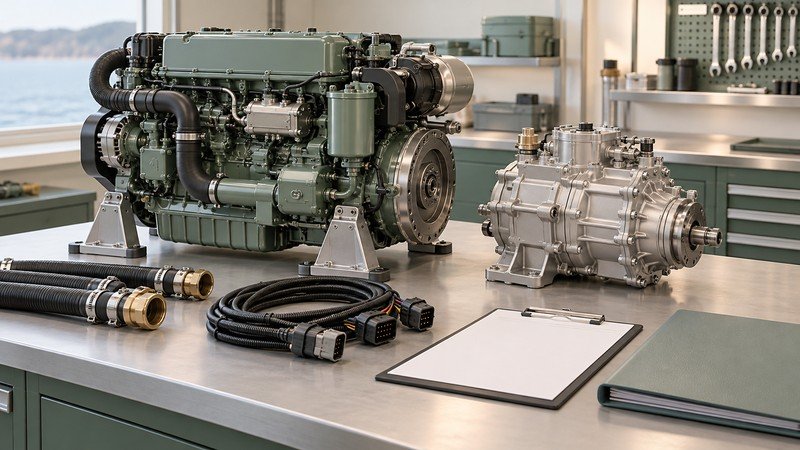
For a generating set, I identify the connected loads, starting sequence, operating hours and site conditions. Agree who reviews sizing, cooling, ventilation, controls and installation. Request documentation for the exact supplied configuration, including any emissions or marine approval evidence applicable to the project. Ask the responsible supplier and buyer’s technical adviser which requirements apply. A certificate bearing a familiar brand name does not settle its relevance to another model, vessel or destination.
How do I verify the supplied unit and replacement parts?
I match supplier evidence to the item being quoted. Record the seller’s legal identity, manufacturer, actual product identification and condition. Request readable nameplate photographs and documents linked to the offered unit. For parts represented as genuine, Weichai’s official verification guidance describes anti-counterfeit marks and an overseas dot-matrix photo-verification process. Ask which verification route applies to the specific supplied parts. Keep origin verification separate from compatibility, dimensional inspection and the seller’s authorization claims.

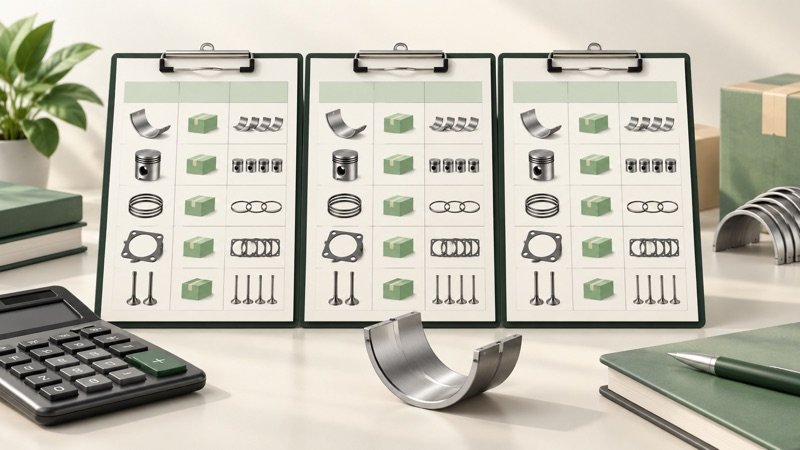
I prepare replacement-part enquiries from the engine model and serial number, then add component references and quantities. Our parts buying checklist helps buyers organize the request. A guide cannot confirm engine-specific fitment. Include clear markings and photographs of the removed component when available. Ask for written reference confirmation before approving substitutions. One missing suffix can create more correspondence than the rest of the order combined.
How should I compare quotations and local support?
I compare quotations for identical deliverables. Separate engine or set price from accessories, testing, packing, freight, installation and commissioning. ITA’s pro forma invoice guidance includes item prices, weights, dimensions, payment terms, delivery point, estimated shipping date and quotation validity. Those fields make our commercial comparison usable. Agree the selected rule, named place and version; ICC’s Incoterms 2020 guidance explains the allocation of costs, risks and obligations between buyer and seller.
I plan service with the actual operating location in mind. Weichai Heavy Machinery’s service page describes support covering service, parts, oils, technical products and remanufacturing. That framework supplies useful questions, not a confirmed response time at our destination. Ask who supplies manuals, commissioning support, maintenance advice and replacement parts for the offered model. Put warranty responsibilities and the claims process in writing. Compare operating-cost estimates using common duty assumptions and clearly identified evidence.
What should our RFQ and acceptance plan include?
I send one organized RFQ rather than scattering identification across several messages. Include the intended marine or land application, exact models where known and a clear list of requested assemblies or components. Provide the destination and proposed schedule. State who reviews technical documents and inspection results. The checklist below gives our purchasing team a practical starting point. For an existing installation, include the engine nameplate and relevant equipment identification before requesting an alternative.
- Manufacturer, full model, serial number and nameplate photographs
- Marine or land application, working conditions and required duty
- Requested assemblies or part references, quantities and condition
- Drawings, controls and applicable project documentation
- Inspection, commissioning and local service responsibilities
- Destination, packing, delivery basis and requested schedule
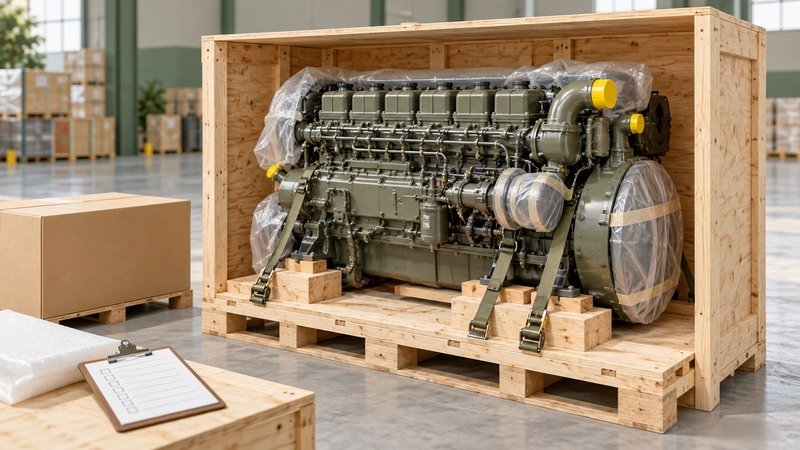
I agree acceptance before payment and dispatch. Match the actual identification, included equipment and documents to the approved quotation. Define any test, its conditions and reviewer in advance. Confirm packing protection, lifting arrangements and shipment records with the supplier. Use our contact page for an engine or parts inquiry. For a complete propulsion or generating package, keep its quotation, integration and commissioning responsibilities with the named manufacturer or integrator so every important task has an owner.
Conclusion
I begin with the correct company, application and supply scope. Then I compare documented ratings, interfaces, origin evidence, support and commercial terms. Send us engine identification, component references, quantities and destination for an organized inquiry. Technical confirmation and an agreed acceptance plan should come before order approval.