A promising equipment proposal can arrive before the details needed to approve it. The brochure looks convincing, but the intended workload, actual configuration and support responsibilities may remain unclear. Buying first and resolving those questions later leaves our operations team carrying the uncertainty. I prefer a documented decision before an overseas order. At Weichaistore, I help organize engine and parts enquiries around identification and scope. This guide shows how buyers can turn a Weichai equipment proposal into a reviewable purchase.
I approve a Weichai equipment purchase only after our reviewers confirm the business need, exact configuration, acceptance evidence, service plan and commercial scope. Identify the complete machine maker separately from the engine supplier. Record destination requirements, delivery responsibilities and unresolved items. Compare buying with practical alternatives using documented assumptions. Assign every outstanding question to an owner and deadline. Our approval record should explain why the proposal fits the operation, with the responsible seller and technical reviewers confirming their respective commitments.
Below, I organize the decision into six questions and an approval worksheet. We can separate verified evidence from assumptions, clarify responsibilities and move a suitable proposal forward with fewer surprises.
What business problem should the proposed purchase solve?
I define the operational problem before reviewing the brand. Record the work required, location, operating hours, loads and constraints. Describe what the existing equipment cannot do, using available operating records. Caterpillar’s general fleet guidance identifies fuel use, idle time, production time and utilization as useful data categories. I use these as measurement prompts, not evidence that a proposed Weichai machine will deliver savings.
I compare purchase with credible alternatives, such as repairing the current equipment, renting or postponing the order. Ask the relevant provider to describe each option’s scope and limitations. Use the same workload and planning period. Record expected benefits as assumptions until supported by evidence. For engine-related costs, our engine purchase budget guide helps organize the inputs. A hopeful spreadsheet still needs its supporting documents.
Which equipment configuration is actually being offered?
I request the complete equipment maker, model, configuration and supplied condition. Weichai’s powertrain catalogue separates engine applications for trucks, construction machinery, agricultural equipment and marine use. Identify the offered engine model and suffix within the actual machine. Confirm whether the offer concerns a complete machine, an engine assembly or replacement parts. Our approval should describe the purchased item precisely, rather than relying on “Weichai equipment” alone.
I check the proposed configuration against the job with the equipment maker or responsible integrator. Weichai Power’s construction engine listing organizes engines by applications including loaders, forklifts and excavators. Those categories do not establish whole-machine capability. Ask for the actual technical specification, included attachments and relevant interface details. Have our technical reviewer confirm suitability and required destination evidence for that configuration. Keep optional and excluded items visible.
What evidence will I accept before signing off?
I agree the acceptance plan before committing to the order. Specify the actual unit or configuration being checked, the records required and who will review them. Ask the responsible provider to propose appropriate inspection or testing against our agreed requirements. Distinguish an inspection photograph from a measured result. Define how deviations will be reported and resolved. A machine video is informative; it should not become an entire acceptance specification.
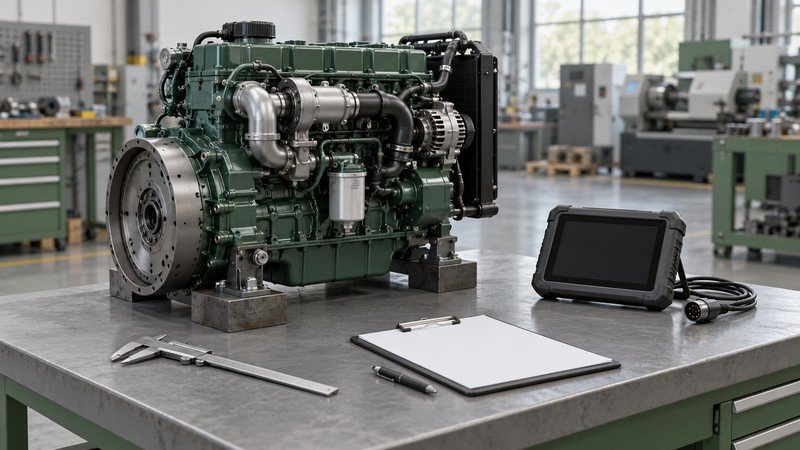
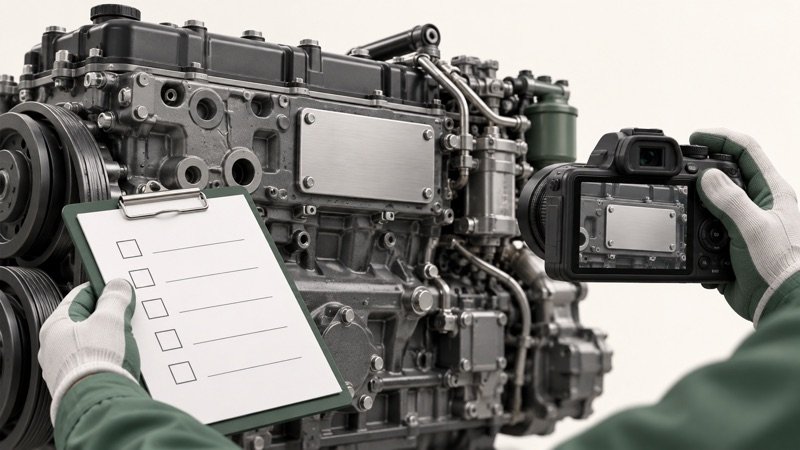
I record the declared condition and relevant identity evidence for new, used or remanufactured offers. Request records tied to the offered unit, not a convenient lookalike. For parts represented as genuine, Weichai’s official verification guidance explains anti-counterfeit marks and overseas dot-matrix photo verification. This supports an origin check. It does not confirm part fitment, complete-machine condition or measured performance. Resolve those questions through the appropriate technical and acceptance records.
Who will support the equipment at our destination?
I identify the actual support provider before treating service as available. Weichai’s service network lists regional contacts that buyers can use to investigate coverage. Ask whether the offered model, purchase channel and destination qualify for the proposed service. Record who supports the engine and who supports the remaining machine. A regional contact listing is a route for enquiry, rather than confirmation of our order’s warranty coverage.

I request written warranty terms and a practical maintenance plan. Identify claim procedures, exclusions and responsibility for labor, travel, diagnostics and parts. Check manuals, service information, operator preparation and the local provider’s stated capabilities. For maintenance purchasing, build a parts list from the actual engine identity and approved references. Record quoted availability and lead times. Treat unresolved support arrangements as open approval items, especially when the equipment must start work shortly after arrival.
Which commercial and delivery gaps must I close?
I review an itemized quotation with the named seller. ITA’s pro forma invoice guidance identifies seller and buyer details, item prices, weights, dimensions, payment terms, delivery point, shipment estimate and validity as useful fields. Ask our commercial reviewer to reconcile these with the approved technical scope. The worksheet below is our purchasing framework, not a manufacturer’s certification system. Add the evidence location, reviewer and current status for each row.
| Approval area | Evidence I attach | Reviewer I assign |
|---|---|---|
| Operational need | Workload, constraints and alternatives | Operations |
| Equipment identity | Maker, model, engine and supply scope | Technical |
| Acceptance | Agreed checks, records and deviation process | Technical / inspection |
| Support | Named provider, maintenance and written terms | Service / procurement |
| Budget | Itemized scope, assumptions and exclusions | Commercial / finance |
| Destination and dispatch | Required evidence, packing and delivery responsibilities | Logistics / local adviser |
| Decision | Proposal version, open items, owners and deadlines | Authorized buyer |
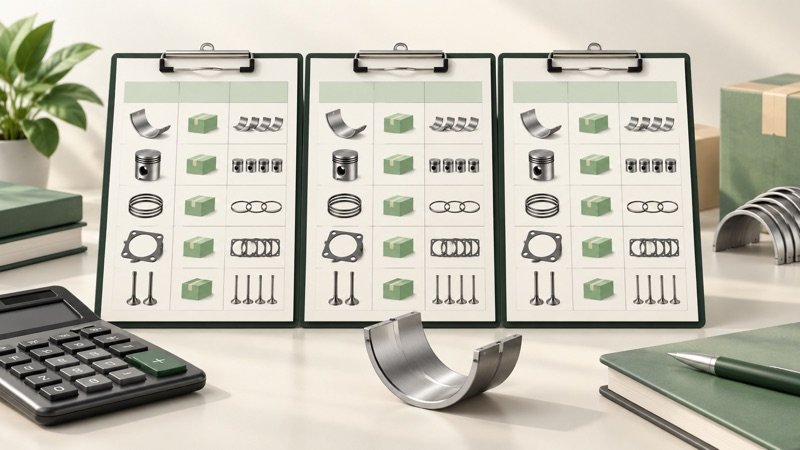
I close shipping responsibilities using an agreed rule, version and named place. ICC’s Incoterms 2020 guidance describes allocation of costs, risks and obligations. Separately confirm payment terms, warranty and acceptance arrangements. Request packing and shipment information appropriate to the purchased item. ITA’s packing-list guidance describes package contents, weights and measurements. Our logistics reviewer should reconcile those records with the approved supply and confirm remaining destination checks.
How do I record a clear approve, revise or defer decision?
I record one decision against a dated specification and quotation version. Approve when the responsible reviewers have confirmed the required evidence. Request revision when a resolvable gap remains. Defer when the operation, support route or proposal needs further evaluation. Give open items an owner and deadline; do not quietly mark them complete. The checklist below helps keep our enquiry organized. A green approval box should contain evidence, not enthusiasm.
- Application, destination, workload and requested quantity
- Complete equipment maker and model, plus engine identification
- Required condition, included items, options and exclusions
- Proposed inspection, acceptance records and reviewer
- Maintenance, parts, local support and warranty questions
- Itemized quotation, delivery place, schedule and open-item owners
Send identified engine or parts requirements through our contact page, with clear photographs, application details and the requested scope. Our equipment RFQ guide helps structure the request. Keep complete-machine commitments with the named equipment seller. Retain technical approval with the responsible reviewer or integrator. If the configuration or delivery terms change, revisit the affected approval items and ask the relevant parties to confirm the revised proposal.
Conclusion
I approve a purchase through documented need, configuration, acceptance, support and delivery evidence. Assign unresolved items before releasing the order. Send us clear engine or parts identification to organize the enquiry, and keep the final technical and commercial decisions with the responsible reviewers.