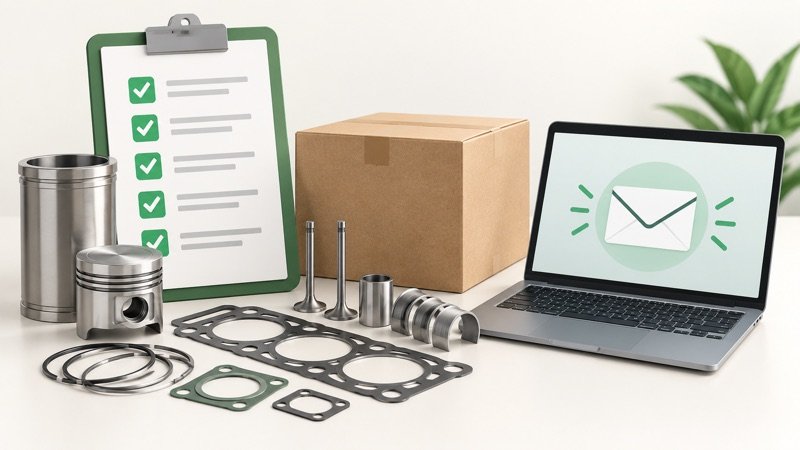
An equipment quotation can look attractive until the details disappear. Which machine is included? Which engine powers it? Who handles a fault after delivery? For overseas buyers, a vague answer can leave the purchasing team comparing different configurations and budgeting for surprises. A familiar engine name cannot settle every question about a complete machine. I prefer a clear purchase brief. At Weichaistore, we recommend checking application, equipment identity, lifecycle costs and support before approving an equipment, engine or parts order.
I evaluate Weichai-powered equipment by confirming the complete machine maker, exact model and engine configuration. I match its specifications to our actual workload, compare the full purchase and operating costs, and verify the supplier and product evidence. I also confirm local service responsibilities, documentation and inspection criteria before agreeing commercial terms. For an engine or parts inquiry, we start with identification, references, quantities and destination. A disciplined comparison supports a purchasing decision; it does not guarantee profit or future returns.
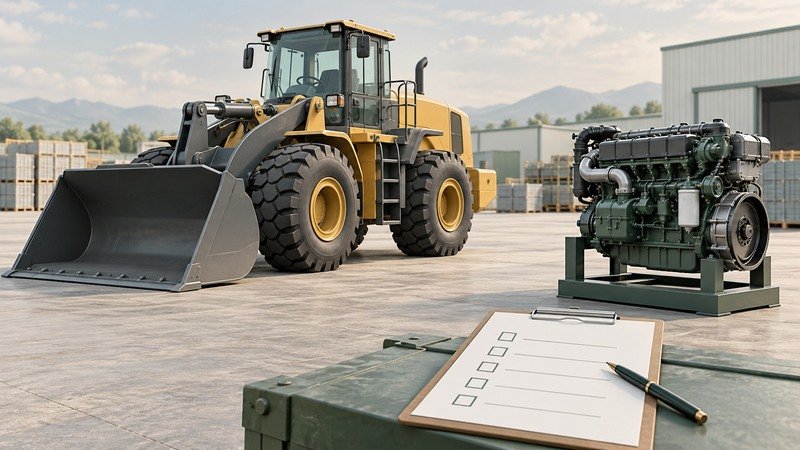
These six questions turn a broad equipment idea into a usable buying brief. Our aim is comparable quotations and clear responsibilities, with fewer mysteries arriving inside the shipping crate later.
What exactly am I buying: a machine, an engine, or parts?
I first separate the complete machine, its power system and the requested components. Weichai’s official engine catalogue lists applications including loaders, bulldozers, excavators and road rollers. Those application categories are a starting point, not a complete machine specification. Record the equipment OEM, model, machine serial number, full engine designation and engine serial number. An engine brand tells me who made the engine, not everything supplied around it.
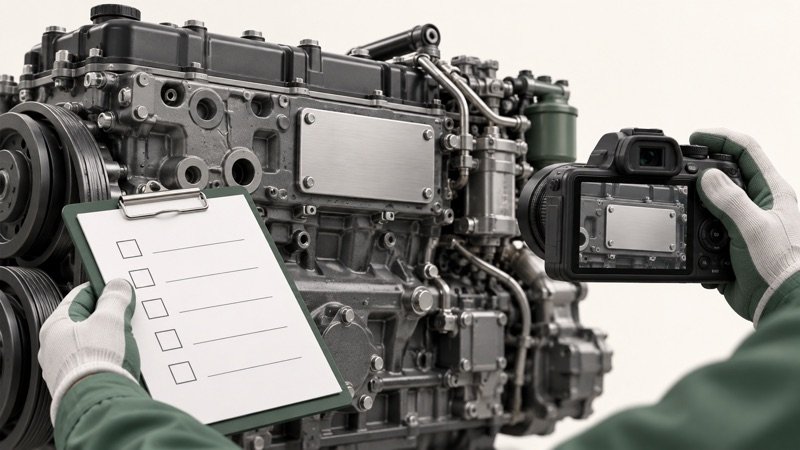
I ask the bidder to list every included assembly and option. For a complete machine, identify attachments, controls, manuals and commissioning scope. For an engine, distinguish a complete assembly from a basic engine or short block. For parts, specify each reference and quantity. A group relationship or shared family name does not establish interchangeability. Our engine buying guide helps structure an engine-specific inquiry before quotations start multiplying.
Does the equipment match our working conditions?
I compare machine capability with the actual job. The official Shantui SE240LC specification identifies a WP7H engine alongside separate machine weight, bucket capacity, digging force and working dimensions. That is a useful example of the information to review, not a configuration we promise to supply. The page describes a particular Chinese-market model. An export variant needs its own documentation; neither the engine name nor that page establishes destination compliance.

I write down material, terrain, working space, attachment needs and expected hours. Include ambient temperature, altitude and dusty conditions when requesting the technical review. Ask the responsible equipment supplier to confirm the exact configuration against those conditions. Where productivity matters, agree a representative task and measurement method. Peak engine power is not a universal productivity score. I would rather compare useful work than award a trophy to the largest number on the brochure.
How do I compare lifetime costs without inventing returns?
I compare lifetime costs over the same planned ownership period. Start with equipment and options, inspection, shipment, installation and commissioning. Add expected fuel, routine service, wear parts and repair provision using documented assumptions. Record residual value separately as an estimate. I label confirmed quotations, historical operating data and forecasts differently. That stops a spreadsheet presenting guesswork as boardroom certainty.
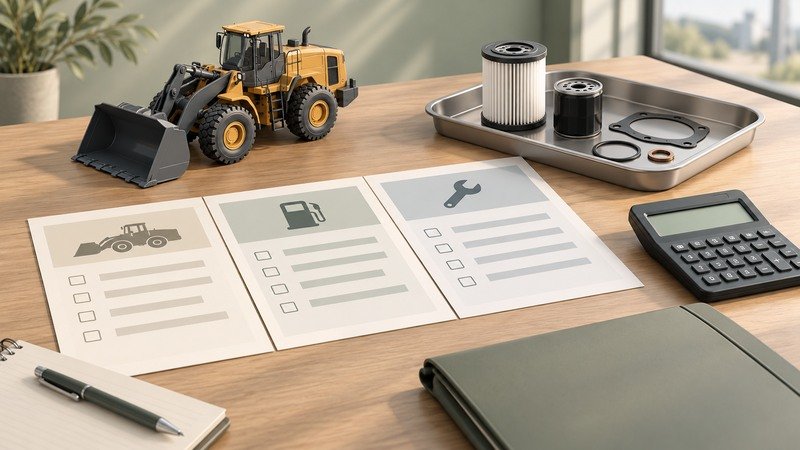
I also compare costs per productive hour or unit of useful output where the job allows it. Use consistent workload and utilization assumptions. Run a cautious scenario with fewer working hours and longer parts delays. Include replacement equipment or rental costs if downtime affects operations. These are our planning recommendations, not measured savings for a particular model. A lower invoice can be attractive without proving a better lifetime result. Write down the uncertainty before approving it.
How do I verify the supplier and product origin?
I verify the actual selling company and the product offered. Request legal business details, the quotation issuer, payment beneficiary and clear contact responsibilities. Resolve unexplained differences before ordering. For new or used equipment, request identification photos and condition records tied to the specific unit. Agree which documents and inspection results the buyer receives. A polished presentation cannot replace an identifiable machine and defined purchase scope.

For parts claimed as genuine, Weichai’s official verification guidance describes exclusive anti-counterfeit marks and overseas dot-matrix photo verification. Ask for relevant label and packaging evidence and use the applicable official process. Authenticity is one check. It does not confirm that a component fits your engine, matches a repair size or meets the agreed condition. Our parts buying guide keeps those separate questions visible.
| Decision line | What I need recorded |
|---|---|
| Purchase identity | Equipment OEM, machine model, engine designation and serial numbers |
| Application | Job, attachments, working conditions and required useful output |
| Lifetime cost | Ownership period, purchase, operation, maintenance and downtime assumptions |
| Evidence | Supplier identity, actual unit, inspection scope and parts-origin checks |
| Support | Local responsibilities, manuals, replacement references and written terms |
| Approval | Comparable quotation, acceptance records and agreed delivery basis |
Who will support the equipment after delivery?
I confirm the people and resources that can support the exact equipment locally. Weichai’s aftermarket framework covers service, original parts, oils, technical products and remanufacturing. That framework helps organize our questions. It does not prove support availability for a particular machine at your site. Ask who handles engine issues, hydraulics, controls and structural repairs, and which supplier is responsible for each part of the system.
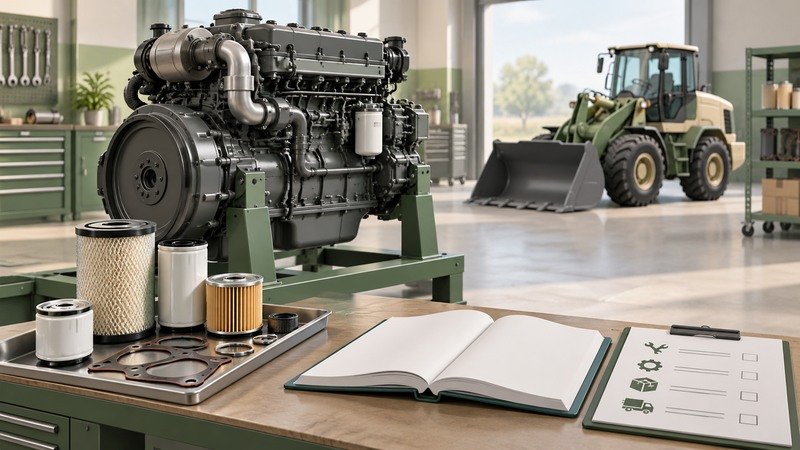
I request manuals for the delivered configuration, maintenance schedules, diagnostic access where needed and written support terms. Ask about routine consumables, key replacement references and quoted lead times. Confirm what the buyer must arrange locally. Keep engine and complete-machine warranty responsibilities distinct, including exclusions and the claims process. A proposed spare-parts package should follow the actual application and maintenance plan. Unidentified boxes are storage, not a service strategy.
What should our RFQ and acceptance plan include?
I send one RFQ with the job brief, equipment identity, configuration and evidence requirements. The International Trade Administration’s pro forma guidance includes item prices, weights, dimensions, delivery point, payment terms, estimated shipping date and quotation validity. I request those fields, plus the included options, packing method and inspection scope. State the requested date as a requirement to confirm, rather than quietly treating an estimated shipping date as guaranteed arrival.
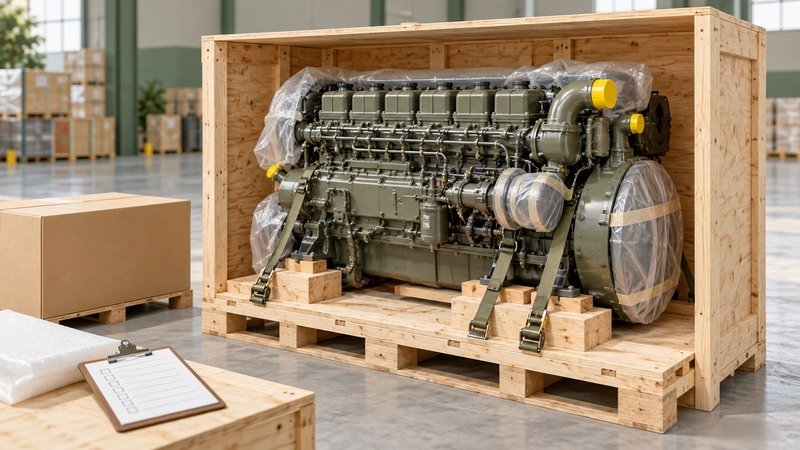
I agree acceptance criteria, records and responsibility for resolving differences before dispatch. A qualified reviewer should define any safe functional tests against the actual machine and application. ICC’s Incoterms 2020 guidance explains allocation of costs, risks and obligations; specify the agreed rule, named place and version. For engine or parts questions, use our contact page. The complete-machine supplier remains responsible for its machine quotation, configuration and agreed acceptance scope.
- Equipment maker, exact model, machine and engine identification
- Application, attachments, workload and operating conditions
- Requested supply scope, options, component references and quantities
- Inspection criteria, identification photos and required acceptance records
- Manuals, local support responsibilities and written warranty terms
- Destination, packing, requested date and quotation delivery basis
Conclusion
I approve a documented configuration and purchase scope before trusting a headline promise. Match the job, compare lifetime costs and confirm inspection and support. Send us engine identification, component references, photos, quantities and destination to start an engine or parts inquiry with the important details already visible.