A Weichai generator quotation can look convincing while leaving the purchase surprisingly vague. The engine brand appears in bold, but the assembler, included equipment and acceptance evidence remain mysterious. Overseas buyers then compare different packages as though they were identical. That is how a discount acquires expensive footnotes. I prefer to resolve the uncertainty before approval. At Weichaistore, our purchasing approach starts with exact identity, documented scope and responsibilities. This guide helps turn a promising offer into an assessable order.
I verify a Weichai generator quotation by matching the complete genset identity, engine and component models to one approved specification. I confirm electrical ratings, operating duty, included equipment and exclusions. Then I check the seller, any authorization claim, agreed tests, warranty responsibility and overseas delivery terms. Our approval record should identify unresolved questions and the person responsible for each. For engine or parts enquiries, send us identification and references. Obtain complete package commitments from the named assembler before approving payment.
Below, I separate product evidence from commercial promises. Our aim is a quotation that purchasing, engineering and service teams can approve together, without needing a detective and a magnifying glass.
How do I identify the exact generator and supplier?
I ask whether the offer covers a manufacturer-branded complete genset, an independently assembled package using a Weichai engine, or the engine alone. Record the genset maker, model and assembly location separately from engine identification. Weichai’s Energy & Power overview distinguishes generation engines in kWm from generator sets in kWe. That distinction matters: an engine nameplate does not establish the complete package’s electrical output or identify its assembler.
I request the seller’s legal name, address and contracting role. If the seller claims manufacturer or authorized-dealer status, ask for evidence covering the actual product and relevant territory. Confirm it through the named manufacturer’s contact channels. Identify who supplies the equipment and who supports the assembled set. We should leave no ambiguity about the entity receiving payment and providing contractual commitments.
Which ratings and configuration must the quotation define?
I compare the exact rating labels in the proposed model documents. For example, Weichai Group’s WPG110L1 catalogue row lists prime power of 100 kVA/80 kW, standby power of 110 kVA/88 kW, and a Baudouin 4M10G6D3/5 engine. This is one published configuration, not our stock specification. It shows why I record the set model, component identity and duty together. Request current confirmation for the actual offered package.
I freeze the technical brief before accepting commercial changes. State frequency, voltage, phases, operating duty, site conditions and the reviewed load schedule. Identify the alternator, controller, breaker, cooling arrangement, canopy and transfer equipment where applicable. Mark each item included, optional or excluded. Our generator selection guide covers the engineering brief in more detail. Have the assembler declare deviations and obtain technical approval for substitutions.
What supplier and parts evidence can I verify?
I request current photographs and identification records for the actual unit when one is allocated. Match the assembled-set plate and component details to the agreed configuration. For parts represented as genuine, Weichai’s official verification guidance explains anti-counterfeit marks and overseas dot-matrix photo verification. Ask which verification route applies to the supplied items. This helps investigate parts origin; it does not certify a complete genset, prove performance or settle compatibility.

I also reconcile the quotation, technical sheets and inspection records. Ask who issued each document, which model or serial number it covers, and whether its configuration matches our purchase. Verify certification claims with the relevant issuing body or official channel. A generic certificate for another model remains generic, however impressive its border. Evidence should answer the claim being made, rather than decorate the offer.
How do I compare generator prices on equal terms?
I compare offers using one scope, quantity, currency and delivery basis. ITA’s pro forma invoice guidance identifies useful fields including seller and buyer details, item prices, weights, dimensions, payment terms, estimated shipping date and quotation validity. Ask for line items covering the genset, options, spare parts, testing, packing and transport. Record taxes or destination charges as confirmed, excluded or pending. An unknown amount deserves a visible question mark, not an imaginary zero.
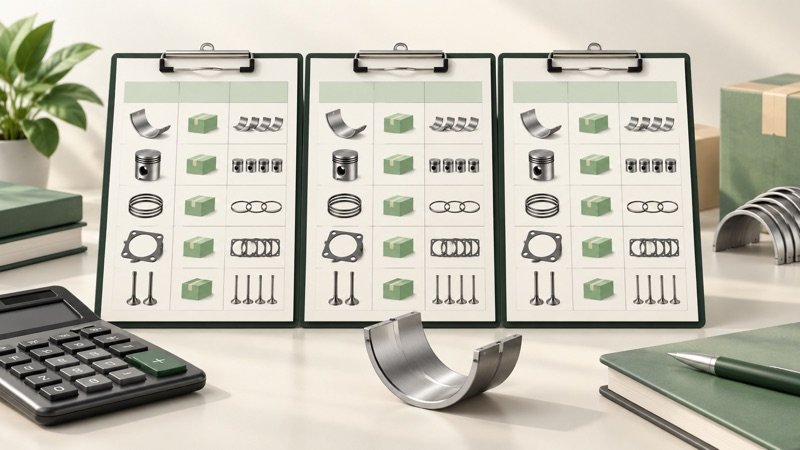
I state the agreed trade rule, version and named delivery point. ICC’s Incoterms 2020 guidance explains how the rules allocate costs, risks and responsibilities. Reconcile those terms with freight arrangements and the actual scope. Price installation, cabling, commissioning and other excluded work separately with the responsible providers. The table below is our approval worksheet. Compare included items and the costs and tasks that remain ours.
| Approval item | Evidence requested | Responsible reviewer |
|---|---|---|
| Set identity | Genset model, assembler and component list | Buyer and assembler |
| Technical duty | Reviewed brief and model-specific ratings | Engineer and assembler |
| Supplier claims | Legal identity and applicable authorization evidence | Purchasing team |
| Acceptance | Agreed test plan and unit-linked records | Engineer and named inspector |
| Commercial scope | Included costs, delivery point and exclusions | Commercial and logistics teams |
| Support | Warranty terms and confirmed service route | Buyer and responsible provider |
What tests and warranty terms should I agree before payment?
I agree the acceptance plan before final commercial approval. ISO 8528-6:2023 covers test methods for characterizing an entire generating set and notes that some applications can need supplementary requirements. Its public abstract is not a certificate for an offered unit. Ask the assembler and responsible engineer to define the applicable test basis, tested configuration, conditions, acceptance criteria and required records. State whether a buyer or appointed inspector will witness the agreed tests.
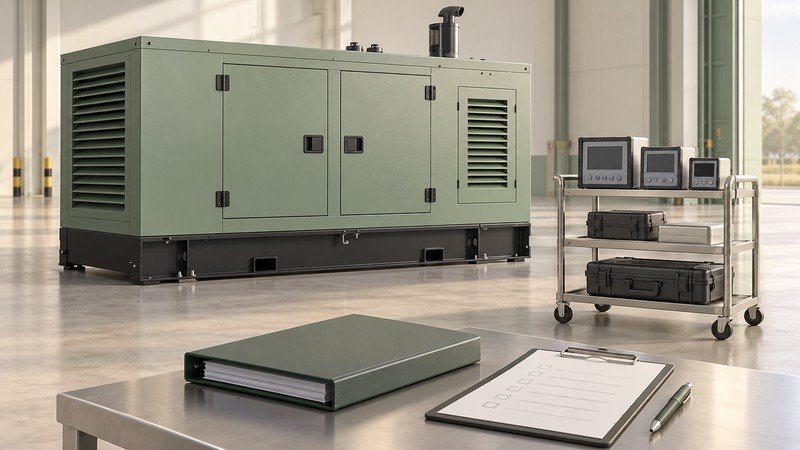
I link test records to the delivered unit and agree how deviations are resolved. For warranty, identify the responsible party, start date, coverage, exclusions and claim process. Clarify overseas labor, travel, diagnostics and parts costs. Weichai’s service-support portal provides a route to investigate engine support. Confirm actual coverage for the model, destination and purchase channel. Engine support does not automatically cover another assembler’s alternator, controls, canopy or installation work.
What should our RFQ and dispatch approval include?
I send one RFQ containing the approved brief and purchasing conditions. Ask suppliers to reference its version and list exceptions. Before dispatch release, reconcile the allocated unit, included items, agreed records and required documents against the final order. Define payment milestones with clear evidence requirements. Confirm packing, handling information, packed dimensions and weight, shipment responsibilities and document deadlines. Distinguish an estimated dispatch date from an agreed arrival commitment. The checklist below keeps our approval practical.
- Application, quantity, destination and required schedule
- Genset model, assembler and full component identification
- Approved electrical brief, duty and site conditions
- Included equipment, options, exclusions and declared deviations
- Test basis, acceptance evidence and warranty responsibilities
- Payment milestones, delivery terms and shipment documents
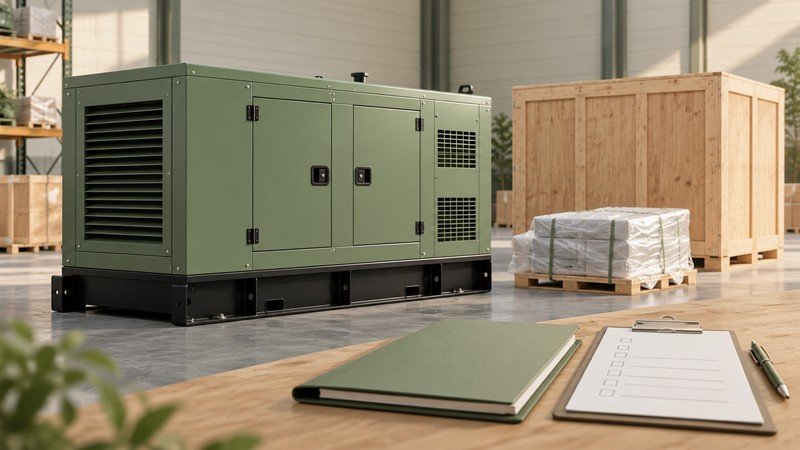
For engine or maintenance-parts enquiries, use our contact page with clear identification and requested references. Our parts purchasing guide helps organize that separate scope. Keep complete-genset configuration, package warranty and test commitments with the named assembler and seller. Have destination requirements reviewed by the responsible local adviser. Approve one consolidated technical and commercial record, resolving outstanding items before dispatch.
Conclusion
I approve the documented generator package before approving its price. Confirm identity, ratings, scope, seller evidence, acceptance tests and support responsibilities. Send us engine or parts identification for a clearer enquiry. Keep complete-set commitments with the named assembler and approve one consistent order record.