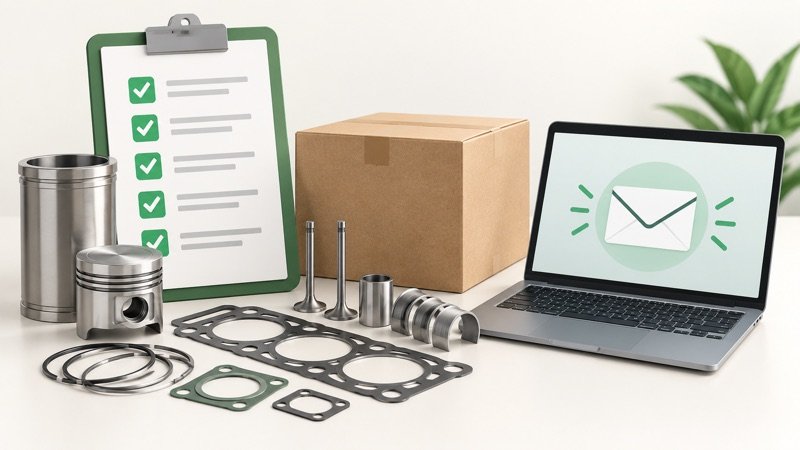
Buying a truck advertised simply as ‘Weichai’ leaves important questions unanswered. The engine name does not identify the vehicle manufacturer, chassis configuration or condition. Approving a vague quotation can leave our buying team arguing about equipment after payment, when clarification becomes considerably less entertaining. I begin with the complete vehicle identity and operating brief. Then I compare configuration, evidence, costs and delivery responsibilities. This turns a promising advertisement into a purchase that our technical and commercial reviewers can assess properly.
I buy a Weichai-powered truck by confirming the vehicle manufacturer, exact model, VIN and full engine identification. I match its approved configuration to the route, load and body requirements, then review condition evidence, destination documentation and local support. Our quotations must cover identical equipment, inspection, delivery terms and acceptance criteria. For engine or parts enquiries, send us identification and item references. Obtain the complete vehicle specification and purchase agreement from the named vehicle supplier before approving payment or overseas dispatch.
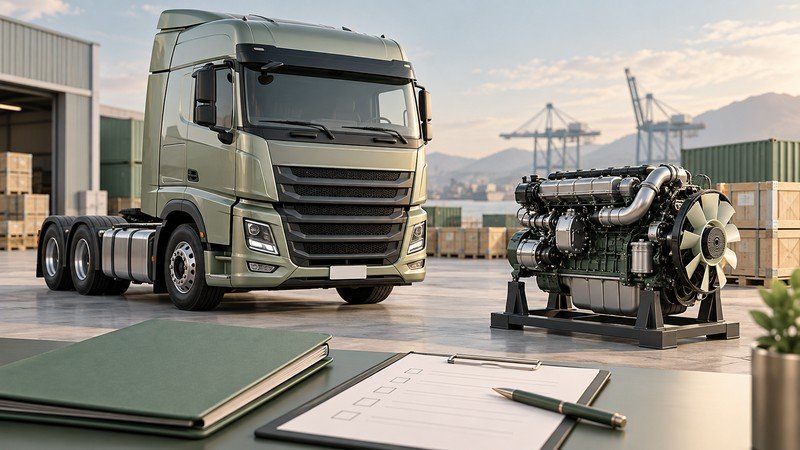
Our checklist separates the truck purchase from the engine and replacement parts. A famous engine badge starts a conversation; it cannot explain the body, approve the route or inspect brakes.
Which truck manufacturer and engine am I actually buying?
I record the vehicle maker separately from the engine maker. SHACMAN’s official F3000 page lists tractor, dump and cargo applications, several drive configurations, and Weichai or Cummins engine brands. That is a useful family example, not proof that every F3000 has a Weichai engine. Request the exact offered vehicle model and build specification. For an identified unit, match its VIN, vehicle plate and engine nameplate to the quotation.
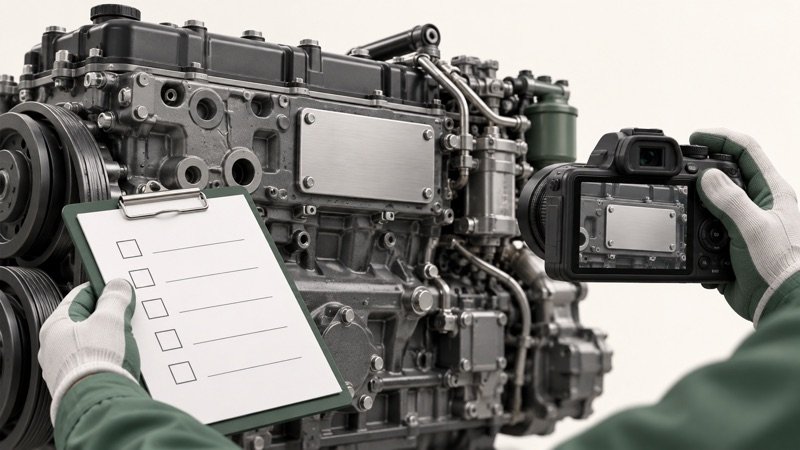
I also record the full engine model, suffix and serial number. Weichai’s official powertrain catalogue distinguishes engines for tractor, cargo, dump and special-purpose trucks. A family name alone does not establish the installed variant or parts fitment. Our diesel engine comparison guide explains why application and identification matter. Ask the vehicle supplier to confirm the actual engine, transmission and axle combination in writing.
How do I match the truck to our route and load?
I define the work before comparing engine power. Specify the cargo, expected operating mass, route length, gradients, road surface and loading pattern. Add temperature, altitude and the intended daily operating profile. Have the vehicle supplier’s technical team propose a configuration for that brief. These are our purchasing questions, not a universal model recommendation. A highway tractor and a site tipper deserve separate specifications, even when their engine families sound familiar.

I use the table below as an approval checklist. Ask the responsible reviewer to confirm body dimensions, wheelbase, axle arrangement, ratios, tires, braking and any required PTO equipment. Keep manufacturer-rated masses separate from the permitted operating limits confirmed for the destination and route. Body volume is not an approved payload. The calculator deserves respect, but it does not issue vehicle approvals.
| Decision | Request from supplier | Approval owner |
|---|---|---|
| Vehicle identity | Model, VIN and build specification | Vehicle supplier and buyer |
| Load and route | Rated masses and proposed configuration | Technical and destination reviewers |
| Body and driveline | Dimensions, transmission, axles and PTO scope | Vehicle supplier’s technical team |
| Condition | Unit-linked records and agreed inspection | Buyer and named inspector |
| Delivery and support | Shipment terms and service responsibilities | Commercial and local service reviewers |
What evidence should I request for a new or used truck?
I ask a new-truck seller for the build specification, production information, current unit photographs and inspection records. For a used truck, I request VIN-linked service history, mileage or hours evidence, repair disclosures and an independent condition assessment. Agree the inspection scope beforehand, including engine, chassis, braking, tires, body and fitted equipment. ‘Certified pre-owned’ needs an identified issuer, criteria and written warranty terms; the phrase alone is not our acceptance test.
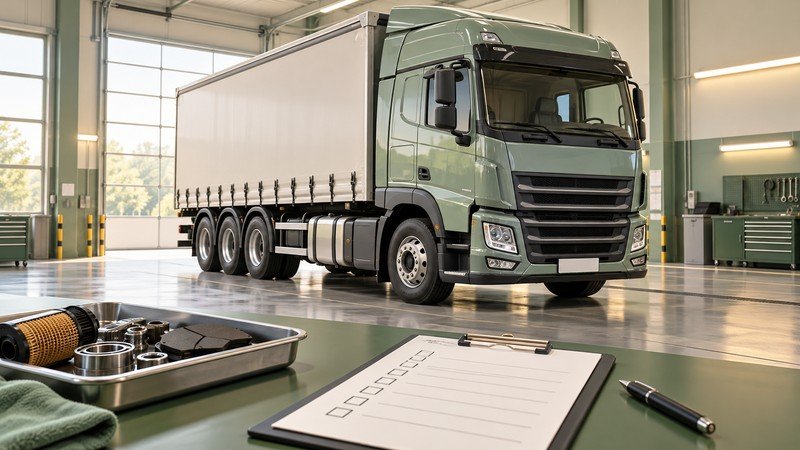
I verify the seller’s legal identity and authority claims through the relevant manufacturer. For parts represented as genuine, Weichai’s official verification guidance describes anti-counterfeit marks and overseas dot-matrix photo verification. Ask which process applies to the supplied parts. Origin checks do not confirm whole-truck condition or component compatibility. Our parts buying checklist helps organize references and quantities before approving replacements.
How do I compare quotations and operating costs?
I compare offers on one specification and delivery basis. ITA’s pro forma invoice guidance identifies useful fields such as item prices, weights, dimensions, payment terms, delivery point, estimated shipping date and validity. Separate the vehicle, body, options, inspection and transport charges. State the agreed trade rule, named place and version. ICC’s Incoterms 2020 guidance explains allocation of costs, risks and obligations between buyer and seller.
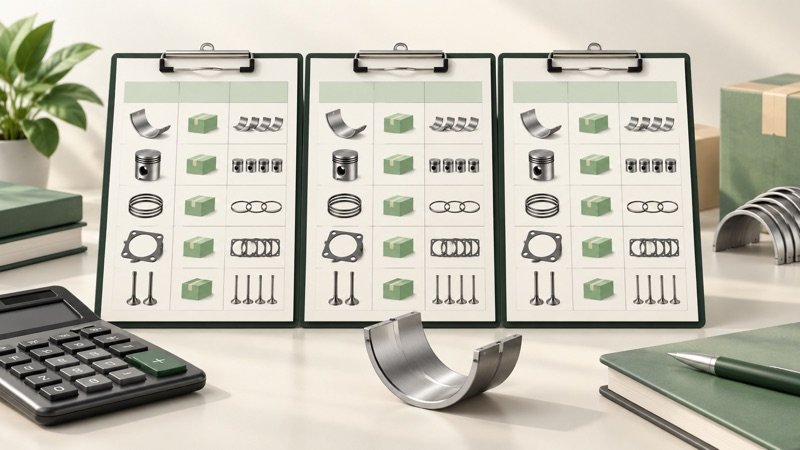
I estimate operating costs from our intended duty, not a blanket fuel-saving percentage. Request model-specific consumption evidence and its test conditions. Compare fuel, scheduled maintenance, tires, parts provision and expected downtime using stated assumptions. Treat resale estimates as uncertain. Check any financing offer separately for its issuer, currency, fees and repayment terms. A lower invoice can be attractive; missing equipment does not become free because it was omitted elegantly.
Which destination documents and service arrangements need confirmation?
I request destination confirmation before committing to shipment. Give the vehicle supplier and our local import adviser the exact model, condition, year and configuration. Ask them to identify applicable import, registration and operating requirements, including any emissions documentation. Verify relevant documents with their issuing bodies or official channels. A catalogue emissions label is not proof of vehicle acceptance everywhere. Record the required documents, reviewer and approval deadline in our purchasing plan.

I identify who will service the complete vehicle and who supports its engine. SHACMAN’s official service locator provides a country-selection interface and a distributor authorization-check route. Use the manufacturer’s contact channels to confirm the proposed provider and actual coverage. Request written warranty scope, exclusions, claim procedure and responsibility for diagnostics, labor and replacement parts. A network listing starts verification; it does not promise support for our particular imported or used truck.
What should our RFQ and acceptance plan include?
I send one RFQ that connects the operating brief to the offered configuration. Include vehicle identity, engine details, condition, quantity and destination. For an existing fleet, attach identification photographs and the required component references. Ask suppliers to state deviations explicitly rather than silently changing a body, axle or model suffix. The checklist below keeps our commercial comparison tied to the same technical request.
- Vehicle maker, model, VIN and engine identification
- Route, cargo, operating profile and proposed configuration
- Body, driveline, options, condition and quantity
- Destination documents and named approval reviewers
- Inspection criteria, warranty scope and local service contact
- Delivery basis, payment terms and requested schedule
I agree acceptance and dispatch evidence before final approval. Match the unit identification, configuration and included items against the approved quotation. Define inspection conditions, acceptance criteria, document checks and who releases shipment. Agree protection, transport preparation and shipment records with the vehicle supplier. Use our contact page for an engine or parts enquiry. Keep complete-vehicle configuration, purchase terms and destination approval with the named vehicle supplier and responsible reviewers.
Conclusion
I choose a Weichai-powered truck through documented vehicle identity, application fit and purchase evidence. Compare complete costs and confirm destination acceptance and service responsibility. Send us engine identification and requested parts for an organized enquiry. Approve the exact vehicle specification with its supplier before payment and dispatch.